Friday, March 8, 2013

2001 Cii Movie Awards


This list and awards compiled March 8, 2013
                      For the criteria of choosing the awards, click here.

Top 10 Films of 2001
  1. Lord of the Rings: Fellowship of the Ring (Peter Jackson)
  2. Mulholland Drive (David Lynch)
  3. Ali (Michael Mann)
  4. The Royal Tenenbaums (Wes Anderson)
  5. A.I. Artificial Intelligence (Steven Spielberg)
  6. Domestic Violence (Frederick Wiseman)
  7. What Time Is It There? (Tsai Ming-liang)
  8. Trouble Every Day (Claire Denis)
  9. Electric Dragon 80.000 V (Sogo Ishii)
  10. Black Hawk Down (Ridley Scott)
Honorable Mentions: In the Mood for Love (Wong Kar-Wai), Gosford Park (Robert Altman), Y Tu Mamá También (Alfonso Cuarón), The Man Who Wasn't There (Joel Coen)


Best Actor
* Gene Hackman – The Royal Tenenbaums
Jack Nicholson – The Pledge
Will Smith – Ali
Billy Bob Thorton – The Man Who Wasn’t There
Tom Wilkinson – In the Bedroom


Best Actress
Halle Berry – Monster’s Ball
Maggie Cheung – In the Mood for Love
Catherine Keener – Lovely & Amazing
Audrey Tautou – Amélie
* Naomi Watts – Mulholland Drive


Best Supporting Actor
* Jim Broadbent – Moulin Rouge!
Steve Buscemi – Ghost World
Jude Law – A.I. Artificial Intelligence
Ian McKellen – Lord of the Rings: Fellowship of the Ring
Tony Shalhoub – The Man Who Wasn’t There
Ben Stiller – The Royal Tenenbaums


Best Supporting Actress
Jennifer Connelly – A Beautiful Mind
Cameron Diaz – Vanilla Sky
* Illeana Douglas – Ghost World
Frances O’Connor – A.I. Artificial Intelligence
Gwyneth Paltrow – The Royal Tenebaums
Maribel Verdú – Y Tu Mamá También


Best Director

Robert Altman – Gosford Park
Claire Denis – Trouble Every Day
* Peter Jackson – Lord of the Rings: Fellowship of the Ring
David Lynch – Mulholland Drive
Steven Spielberg - A.I. Artificial Intelligence


Best Screenplay
Electric Dragon, 80.000V (Sogo Ishii)
Lord of the Rings: Fellowship of the Ring (Frances Walsh, Phillipa Boyens & Peter Jackson)
Memento (Christopher Nolan & Jonathan Nolan)
Mulholland Drive (David Lynch)
* The Royal Tenenbaums (Wes Anderson & Owen Wilson)


Best Cinematography
* Ali (Emmanuel Lubezski)
Electric Dragon, 80.000V (Kasamatsu Norimichi)
In the Mood for Love (Christopher Doyle & Mark Li Ping-bin)
LOTR: Fellowship of the Ring (Andrew Lesnie)
Mulholland Drive (Peter Deming)


Best Editing
Ali (William Goldberg, Lynzee Klingman & Stephen E. Rivkin)
Black Hawk Down (Pietro Scalia)
Memento (Dody Dorn)
* Mulholland Drive (Mary Sweeney)
Trouble Every Day (Nelly Quettier)


Best Film Score
* Amélie (Yann Tiersen)
In the Mood for Love (Mike Glalasso & Shigeru Umebayashi)
Lord of the Rings: Fellowship of the Ring (Howard Shore)
Mulholland Drive (Angelo Badalamenti)


Best Production Design
* A.I. Artificial Intelligence
Amélie
Lord of the Rings: Fellowship of the Ring
The Man Who Wasn’t There
The Royal Tenebaums

Best Ensemble Cast Performance
Gosford Park
Lord of the Rings: Fellowship of the Ring
Memento
The Pledge
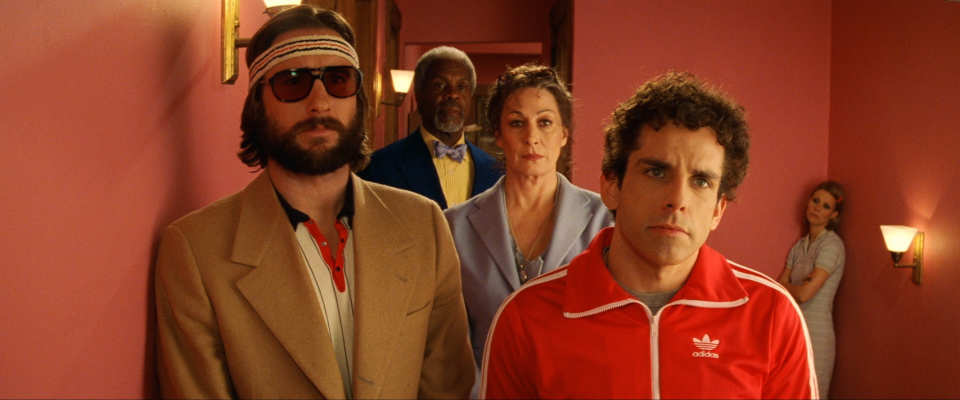
* The Royal Tenenbaums


2001 Films Seen (49 features as of 03.08.2013)

A.I.: Artificial Intelligence (Steven Spielberg, 2001)
Ali (Michael Mann, 2001)

Amélie (Jean-Pierre Juenet, 2001)
American Pie 2 (J.B. Rogers, 2001)
Baby Boy (John Singleton, 2001)
Bandits (Barry Levinson, 2001)
A Beautiful Mind (Ron Howard, 2001)
Black Hawk Down (Ridley Scott, 2001)
Blow (Ted Demme, 2001)
Bridget Jones’ Diary (Sharon Maguire, 2001)
Domestic Violence (Frederick Wiseman, 2001)
Donnie Darko (Richard Kelly, 2001)
Electric Dragon 80.000 V (Sogo Ishii, 2001)
Frailty (Bill Paxton, 2001)
Ghost World (Terry Zwigoff, 2001)
Gosford Park (Robert Altman, 2001)
Hannibal (Ridley Scott, 2001)
Hearts in Atlantis (Scott Hicks, 2001)
Heist (David Mamet, 2001)
Hell House (George Ratliff, 2001)
I Am Sam (Jessie Nelson, 2001)
In the Bedroom (Todd Field, 2001)
In the Mood for Love (Wong Kar-Wai, 2001)
Iris (Richard Eyre, 2001)
Jurassic Park III (Joe Johnston, 2001)
Life as a House (Irwin Winkler, 2001)
Lord of the Rings: Fellowship of the Ring (Peter Jackson, 2001)
Lovely & Amazing (Nicole Holofcener, 2001)
The Majestic (Frank Darabont, 2001)
The Man Who Wasn’t There (Joel Coen, 2001)
Memento (Christopher Nolan, 2001)
Monsters, Inc. (Pete Docter, David Silverman & Lee Unkrich, 2001)
Moulin Rouge! (Baz Luhrmann, 2001)
Mulholland Drive (David Lynch, 2001)
Monster’s Ball (Marc Forster, 2001)
The Others (Alejandro Amenábar, 2001)
The Pledge (Sean Penn, 2001)
The Royal Tenenbaums (Wes Anderson, 2001)
Schlock!  The Secret History of American Movies (Ray Greene, 2001)
The Score (Frank Oz, 2001)
Scotland, PA (Billy Morrissette, 2001)
Shrek (Andrew Adamson & Vicky Jenson, 2001)
Swordfish (Dominic Sena, 2001)
Training Day (Antoine Fuqua, 2001)
Trouble Every Day (Claire Denis, 2001)
Vanilla Sky (Cameron Crowe, 2001)
Waking Life (Richard Linklater, 2001)
What Time Is It There? (Tsai Ming-liang, 2001)
Y Tu Mamá También (Alfonso Cuarón, 2001)

Wednesday, March 6, 2013

2000 Cii Movie Awards


This list and awards compiled March 5, 2013
                      For the criteria of choosing the awards, click here.

Top 10 Films of 2000
  1. Yi Yi (Edward Yang)
  2. Werckmeister Harmonies (Béla Tarr)
  3. Best in Show (Christopher Guest)
  4. Traffic (Steven Soderbergh)
  5. Mission to Mars (Brian De Palma)
  6. High Fidelity (Stephen Frears)
  7. The Gleaners and I (Agnés Varda)
  8. Wonder Boys (Curtis Hanson)
  9. Unbreakable (M. Night Shymalan)
  10. You Can Count On Me (Kenneth Lonergan)
Honorable Mentions: Cast Away (Robert Zemeckis), Erin Brokovich (Steven Soderbergh), O Brother, Where Art Thou? (Joel Coen), Crouching Tiger, Hidden Dragon (Ang Lee), Gladiator (Ridley Scott)


Best Actor
Christian Bale – American Psycho
* Benicio Del Toro – Traffic
Michael Douglas – Wonder Boys
Tom Hanks – Cast Away
Mark Ruffalo – You Can Count On Me


Best Actress
Joan Allen – The Contender
* Ellen Burstyn – Requiem for a Dream
Cameron Diaz – Charlie’s Angels
Laura Linney – You Can Count On Me
Julie Roberts – Erin Brokovich


Best Supporting Actor
Jack Black – High Fidelity
Ben Kingsley – Sexy Beast
Tim Blake Nelson – O Brother, Where Art Thou?
Gary Oldman – The Contender
Brad Pitt – Snatch.
* Fred Willard – Best in Show


Best Supporting Actress
Jennifer Connelly – Requiem for a Dream
* Jennifer Coolidge – Best in Show
Kate Hudson – Almost Famous
Kelly Lee – Yi Yi
Jane Lynch – Best in Show
Ziyi Zhang – Crouching Tiger, Hidden Dragon


Best Director
Brian De Palma – Mission to Mars
Steven Soderbergh – Traffic
Béla Tarr – Werckmeister Harmonies
* Edward Yang – Yi Yi
Robert Zemeckis – Cast Away


Best Screenplay
Best in Show (Christopher Guest & Eugene Levy)
High Fidelity (D.V. DeVencentis, Steve Pink, John Cusack & Scott Rosenberg)
Traffic (Stephen Gaghan)
Wonder Boys (Steve Kloves)
* Yi Yi (Edward Yang)


Best Cinematography
Crouching Tiger, Hidden Dragon (Peter Pau)
George Washington (Tim Orr)
Requiem for a Dream (Matthew Libatique)
Traffic (Steven Soderbergh)
* Yi Yi (Yang Wei-han)


Best Editing
Crouching Tiger, Hidden Dragon (Tim Squyres)
Requiem for a Dream (Jay Rabinowitz)
Traffic (Stephen Mirrione)
Wonder Boys (Dede Allen)
* Yi Yi (Chen Bo-Wen)


Best Film Score
Chocolat (Rachel Portman)
Crouching Tiger, Hidden Dragon (Tan Dun)
* Gladiator (Hans Zimmer & Lisa Gerrard)
Requiem for a Dream (Clint Mansell)
Traffic (Cliff Martinez)


Best Production Design
American Psycho
Crouching Tiger, Hidden Dragon
* O Brother, Where Art Thou?
Traffic
Werckmeister Harmonies


Best Ensemble Cast Performance
* Best in Show
George Washington
O Brother, Where Art Thou?
Sexy Beast
Yi Yi


2000 Films Seen (56 features as of 03.06.2013)
Almost Famous (Cameron Crowe, 2000)
American Psycho (Mary Herron, 2000)
Best in Show (Christopher Guest, 2000)
Big Momma’s House (Raja Gosnell, 2000)
Billy Elliot (Stephen Daldry, 2000)
Cast Away (Robert Zemeckis, 2000)
Charlie’s Angels (McG, 2000)
Chocolat (Lasse Hallström, 2000)
The Contender (Rod Lurie, 2000)
Crime and Punishment in Suburbia (Rob Schmidt, 2000)
Crouching Tiger, Hidden Dragon (Ang Lee, 2000)
Dr. Suess’ How the Grinch Stole Christmas (Ron Howard, 2000)
Dude, Where’s My Car? (Danny Leiner, 2000)
Erin Brokovich (Steven Soderbergh, 2000)
The Family Man (Brett Ratner, 2000)
George Washington (David Gordon Green, 2000)
Gladiator (Ridley Scott, 2000)
The Gleaners and I (Agnès Varda, 2000)
High Fidelity (Stephen Frears, 2000)
Keeping the Faith (Edward Norton, 2000)
Me, Myself & Irene (Bobby Farrelly & Peter Farrelly, 2000)
Mission: Impossible II (John Woo, 2000)
Mission to Mars (Brian De Palma, 2000)
Nurse Betty (Neil LaBute, 2000)
Nutty Professor II: The Klumps (Peter Segal, 2000)
O Brother, Where Art Thou? (Joel Coen, 2000)
The Patriot (Roland Emmerich, 2000)
The Perfect Storm (Wolfgang Petersen, 2000)
Pitch Black (David Twohy, 2000)
Pollock (Ed Harris, 2000)
Quills (Philip Kaufman, 2000)
Red Planet (Anthony Hoffman, 2000)
Remember the Titans (Boaz Yakin, 2000)
Requiem for a Dream (Darren Aronofsky, 2000)
Scary Movie (Keenen Ivory Wayans, 2000)
Sexy Beast (Jonathan Glazer, 2000)
Shadow of the Vampire (E. Elias Merhige, 2000)
Snatch. (Guy Ritchie, 2000)
Space Cowboys (Clint Eastwood, 2000)
State & Main (David Mamet, 2000)
Tears of the Black Tiger (Wisit Sasanatieng, 2000)
Thirteen Days (Roger Donaldson, 2000)
Traffic (Steven Soderbergh, 2000)
U-571 (Jonathan Mostow, 2000)
Unbreakable (M. Night Shyamalan, 2000)
Vertical Ray of the Sun (Anh Hung Tran, 2000)
Virgin Stripped Bare By Her Bachelors (Hong Sang-soo, 2000)
Werckmeister Harmonies (Béla Tarr, 2000)
What Lies Beneath (Robert Zemeckis, 2000)
What Women Want (Nancy Meyers, 2000)
The Widow of Saint Pierre (Patrice Leconte, 2000)
With a Friend Like Harry (Dominik Moll, 2000)
Wonder Boys (Curtis Hanson, 2000)
X-Men (Bryan Singer, 2000)
Yi Yi (Edward Yang, 2000)
You Can Count on Me (Kenneth Lonergan, 2000)


An Image: Faust (F.W. Muranu, 1926)


Faust (F.W. Murnau, 1926)
When Faust summons the dark lord to appear, after the burst of wind and lightening and a harrowing ghostly chariot crashes to the earth, the scene stills and Faust realizes his effort was not unheard.  Ashamed and afraid, he tries to run from Mephisto only to find him again at each place he flees.  This is one of the most frightening images from Faust, and the one that I think of most when I consider the movie.  

Murnau clearly had the full resources of UFA Studios behind him and the desire to give the fantastic story a gloriously expressionistic telling.  His use of sets, costumes, lighting were extraordinary.  Though Murnau is making his epic, he is not afraid of small things.  The small gesture seen above, Mephisto's tipping of the cap, is a sign of friendship that bodes ominous because we know who he is and Faust is already beginning to regret his summons.  Emil Jannings played Mephisto and is one of the great silent film actors, imbuing Mephisto with both strength and ambiguity.  Not surprisingly, the film is full of startling and memorable images that could stand alone as great artistic achievements.  I just picked one among many.

When I was in film school I forced myself to catch up on a bunch of canonical classic movies I had missed.  This eventually lead to me watching Sunrise: A Song of Two Humans (F.W. Murnau, 1927) which led to me discovering Faust.  It was my first off-canon jump into silent cinema, the movie Murnau made before he left Germany for Hollywood.  It was bold and gothic and frightening.  I loved it.  Faust taught me that beyond the film canon of commonly held "greatest films", there lurks a whole world of cinema that may be on the exact same plane, just unheralded. 

Tuesday, March 5, 2013

Judging Oscar: 1980

One of my many on-going film viewing projects is to eventually see all the Academy Award nominees for Best Picture and Best Director.  I have watched or re-watched these films fairly close together and then placed a value judgment on what I saw cinematically.  First up is 1980.

BEST PICTURE

WINNER: Ordinary People (dir. Robert Redford)

When the notes of Pachabel’s canon overlay the idyllic autumn images of a posh Chicago suburb, I figured this was establishing an ironic counterpoint to the story of a family that seem to have it together yet are in the midst of falling apart.  While Pachabel’s familiar theme is taken as indirect comment at first, it is transformed over the course of the movie to express the aching of an idealized memory felt by all the characters in the Jarrett home.  Pachabel’s canon is finally subverted, but only at the end, as it quietly highlights the weight of Beth’s leaving.  There is no irony in Redford’s direction and he avoids stylistic flourishes apart for the flashes of memories that haunt Conrad and Calvin.  In a film full of great performances, Timothy Hutton is the easy standout as the most fully seen and realized character and Hutton is capable of finding every note needed to express not just sadness and apathy but the subtle arc of a teenager growing up under the weight of past burdens.  It is inexplicable why he was nominated as a supporting role, when he is quite clearly the main character and narrative catalyst.  But even the small parts are well cast and played with just enough depth to keep them from being ciphers serving the main narrative.  Elizabeth McGovern is worth mentioning, as she fills her role with stumbling angst and genuine charm.  The movie is not anything I would consider a masterpiece but I can’t fault the Academy for rewarding a well-made character piece.

Coal Miner's Daughter (dir. Michael Apted)

Slow and steady wins the race.  The movie never gets ahead of itself, never sprints toward the money and stardom of Loretta Lynn’s story, but slowly builds up its characters and the atmosphere of poverty, station and Southern tradition from which these characters come, from whose ranks they will break when their ship comes in.  Spacek deservedly nabbed all the acclaim, but Tommy Lee Jones is, as much as he can be, her equal, and creates an amiable and loyal yet conflicted husband who is afraid he is a little too socially ahead of the curve and not sure how he feels about that.  It’s impossible not to see the film as an examination of gender roles as both Patsy Cline and Loretta Lynn have escaped the traditional expectations only because of the number of eyes that watch them sing.  Finally, by the end, what I feel we are witnessing is the high cost of fame. 

The Elephant Man (dir. David Lynch)

This is a film that will live or die to an audience by the pathos garnered by Hurt’s performance, a balance that is made both easier and more difficult by the makeup that mimics the condition of the historical Joseph Merrick.  Lynch’s great achievement in the first half of the film, is in making me approach Merrick emotionally in all the ways Treves does – first as a curiosity, then with pity, then as a macabre scientific spectacle, then anger over the circumstances, frustration over the limitations of communication, and then finally, sympathy that segues into affection.  I felt all of these things for Merrick.  Hurt’s ability to find empathy with the vocal limitations and the slight gestures of his body kept this a very human drama.  I found myself moved by Merrick’s generosity and tenderness in a way it would be easy to take for granted in many other people who had not lived through such abuse due to their deformities.  It feels like an extension of the Kaspar Hauser stories, one where it is mind-boggling to consider how someone could have not only lived through such mistreatment and limitations, but also to have a heart big enough to embrace others afterwards.  Though flawed in the vignetting of scenes and the clumsiness of the last act, it is a film that resonates very deeply with me.

Raging Bull (dir. Martin Scorsese)

A completely unsentimental neo-realist drama couched in between gloriously stylized boxing matches, beginning mythically with injustice before ending in the spiritual death of Jake LaMotta.  Scorsese has filmed one of the great modern tragedies, only he presents a character so universally flawed and despicable that it is hard to do much more than revere the filmmaking and bemoan LaMotta.  But if taken as a portrait of total depravity and human degradation through pride and violence in both heart and life, then Raging Bull can be viewed as not only a technical masterpiece, but also one of the great films of what a life looks like completely absent of grace.

Tess (dir. Roman Polanski)

Tess is a good movie.  It is easy to take for granted the things it does really well (sense of place, family interactions, empathy) because of how effortless it all seems, but it also never achieved anything more than that.  And in a year where the other four film nominated were buoyed by career performances by John Hurt, Timothy Hutton, Sissy Spacek and Robert De Niro, Nastassja Kinski, though good, just doesn’t have the same range as the other actors above her and is given a more ambiguous character to play.  The film has its moments, but in comparison, can’t really stand against the other films in the category.

MY PICK: Raging Bull
The Academy chose five good films this year and even though 1980, in retrospect, has become the year Raging Bull DIDN’T win best picture.  Ordinary People is still a decent choice, even if I wouldn’t have chosen it.  I would take Raging Bull first, then Coal Miner’s Daughter, with The Elephant Man and Ordinary People being about equal in my book, and Tess falling in last place (I consider it a 1979 movie anyway, due to its world premiere being in October of 1979).  


BEST DIRECTOR

WINNER: Robert Redford (Ordinary People)

The compliment I can give Robert Redford’s directorial debut is that his direction does not get in the way of the characters.  That may sound like faint praise but it is really a wonderful achievement.  Not surprisingly for actor-turned-directors, he gives his actors some juicy roles and lets them at it.  Redford’s lack of pretension helps him keep the film from getting too bogged down in some sort of psychological ellipsis, but his lack of interest in planting the story within any sort of social context besides what the narrative affords keeps the film from becoming something truly great.  I don’t mean to sound cynical, but it feels like he won the award more for not screwing up than he did for making a great film.

David Lynch (The Elephant Man)

It would be easy to blame Lynch for the things that don’t work for me about The Elephant Man – the heavy vignetting of scenes, the clumsiness of the last act – but I would have to completely discount the startling first act, the quiet insights into Merrick’s psyche and some of his visitors and the incredible performance of John Hurt.  Lynch avoids making the film a grand spectacle, and that is praiseworthy, and continues as one of the pioneers of incorporating expressionistic sound design in Hollywood films, but he also can’t help himself at times and feels uneasy about getting too close to his characters, especially Dr. Treves.  It is a fine effort, but not without its faults.

Roman Polanski (Tess)

Tess was obviously a personal labor of love for Polanski (he dedicated the film to his late wife Sharon Tate, who had given him the book, hoping he would make the film someday), but he has so forsaken the kinetic energy of his earlier films that by this point he seems like a completely different filmmaker with the same name.  Though he shot the film in France, Polanski finds the right landscapes to read as Britain and he finds colorful supporting actors to fill out the film.  If there is one thing that gets in the way of things, it is his blind love of Nastassja Kinski and his desire to build her the defining moment of her career.  Maybe he did that, but I don’t think it was nearly as defining a moment as he had hoped.


Richard Rush (The Stunt Man)

There must have been a contingent within the Academy that really loved this film because it seems such an odd choice to nominate Richard Rush, who, before this award, had done very little and has since basically dropped off the face of the earth.  But Rush’s film is interesting, if convoluted (which is part of the point) and frustratingly inconsistent, with some of the greatest scenes in American cinema that year (the opening sequence, the ice cream meltdown scene) and yet never finding the right rhythm overall or undecided as to which side of the reality vs. illusion fence it wants to land on.  I can say that Rush made a very strange hugely entertaining movie, and that’s worth something, but I don’t see this as one of the five great directorial efforts of 1980.

Martin Scorsese (Raging Bull)

Scorsese made a deeply personal film about someone quite different than himself; he synthesized techniques from the French New Wave, Italian Neo-Realism, and Hollywood’s Golden Age into a film that would never look like this if Scorsese was not behind it.  It is easy to praise Raging Bull for its bold stylization, but one should not overlook the performances that build upon Brando’s foundation toward a raw naturalism.  Also, though some consider the unsentimental character to be a detriment, Scorsese should be applauded for not giving in to the urge (that I can only assume had to have been there at various times) to make Jake LaMotta more likeable or relatable. 


MY PICK: Martin Scorsese
The director category nearly mirrored Best Picture, with Richard Rush being nominated over Michael Apted.  Now, with the benefit of hindsight bringing the lasting worth and influence of these films to the fore, Scorsese is the obvious choice, if only for his technical achievement.  And judging by the AFI Top 100 Movie List (Raging Bull is #4), if the Academy did it over again today, Scorsese would probably walk away with the statue.