Showing posts with label 2010s. Show all posts

Tuesday, September 8, 2015

Mission: Impossible - Rogue Nation (2015), Auteurism and Genre Determinism

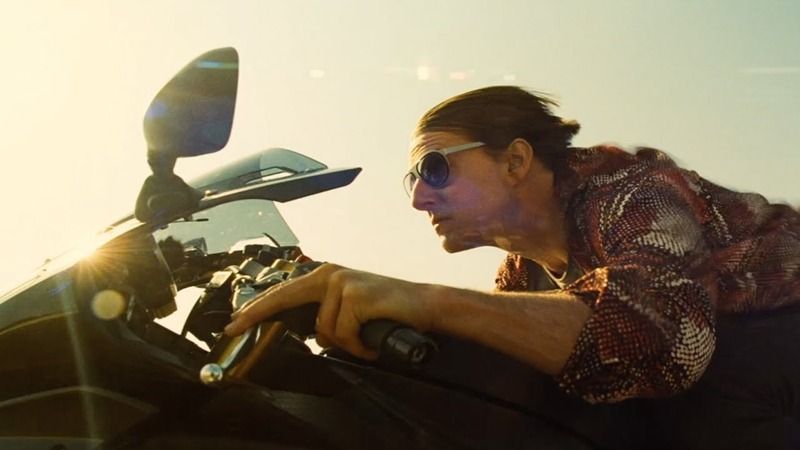
Mission: Impossible - Rogue Nation (Christopher McQuarrie, 2015)
If Jack Reacher was Christopher McQuarrie's resumé for getting the next Mission: Impossible gig, I say that he was clearly the perfect hire. While the Colin Trevorrows of the world are busy making cynical, redundant self-parodies of beloved franchises and the J.J. Abrams of the world are making hundred million dollar Rorschach tests, Christopher McQuarrie is legitimately building upon the legacy of someone like Raoul Walsh or John McTiernan with clever action set pieces and off-handed character humor while still delivering the "impossibly stacked-odds" thrills common to the M:I franchise. It is the perfect popcorn movie in that sense, but, like McTiernan, if you're willing to look closer, you may find even more.

It is neat to see several spy thrillers of the mid-2010s deal with the legitimacy and utility of espionage in the 21st century (I'm thinking also of Skyfall), and that is exactly where Rogue Nation begins. Immediately pitting a top secret conspiratorial shadow government against a top secret conspiratorial shadow agency is a clever bit of plotting in itself but as the movie progresses and the who-can-you-trust/who's-playing-whom dynamics are working themselves out in ever more labyrinthine twists and double-crosses, I began to realize that this is the true legacy of espionage. It could be cynical if we didn't have an investment in seeing Hunt succeed. But this sort of identification is what paints the "good guys" of espionage decidedly behind a nationalistic brush. How do we know who the good guys are? They work for us and are there to keep us safe. In an age that ironically has become increasingly dependent on government involvement, it has also come to despise blatant nationalism. When nationalism suffers, the spy movie suffers along with it. Fittingly then, the bad guy to be stopped is the one who is establishing a "rogue nation" outside of the proper order of things and beyond the accountability (such as it is) of any government or agency. 

But it begs the question: what keeps Hunt – a spy no longer recognized by his home government who is conducting a secret mission without the aid or approval of any other agency – from just walking away from it all? Is it determination or determinism? 

Thursday, December 12, 2013

Mud (2012) and the Shipwreck of Southern Masculinity

Mud (Jeff Nichols, 2012)
Few contemporary filmmakers have nailed an atmospheric sense of place as certainly as Jeff Nichols has.  The South in Mud is dirty, ragged, barely welded together by a guy in a garage, but it still runs.  That's not the whole picture, and Nichols doesn't pretend it is, but it is the existential reality of these particular characters.  They continue to embrace it and therein find their identity.  "I ain't no townie," Ellis tells his dad when told he will be moving to town after his parents split up.  His dad understands but finds himself helpless to do anything different.  Matter of fact, it looks like he's always found himself a little overwhelmed by the basic responsibilities of life.
Talking.  
Loving.  
Giving.  
Listening.  
These aren't things Senior is particularly good at.  
And soon he will pass a lineage of brooding silence onto his boy.
Ellis is a romantic.  It's easy to figure Senior probably was too, once.  He will learn the way of his father through heartbreak.
The most evocative shot in the film.  The stoicism of the southern male exemplified.  

Saturday, November 30, 2013

November 2013 -- Letterboxd Capsules

The Abyss (James Cameron, 1989) [letterboxd capsule]
I can think of several ways the movie could be more satisfying, but the truth is, after the death/resurrection/emotional climax, Cameron had nowhere else to go except into the pit. The theatrical version cuts his hokeyness a bit (thankfully), but it would never satisfy so long as he was committed to bringing us into direct contact with the aliens one last time. He forces them to become a contrived plot point rather than a mysterious texture.

Thankfully, there's lots of sturdy suspense and memorable setpieces leading up to that moment so the film still works for me overall.


Aliens (James Cameron, 1986) [letterboxd capsule]
There is a raw, relentless physicality to this that makes the film particularly intense.  The death of Vazquez has always resonated with me in a strange way.  The pain in her voice when she cries out "oh no" after being paralyzed by an acid burn on her leg....it's more than just imminent death, it is the deep sting of failure.


Any Given Sunday (Oliver Stone, 1999) [letterboxd capsule]
Stone's overwrought professional football movie is very entertaining (I've seen the film several times even though I don't think it's that great) but it thinks it is way more insightful and observant than it truly is.  Add to that Stone getting a little carried away with his collage style editing and some frustratingly thin characterizations.  I think Jerry Maguire played the changing-face-of-pro-sports-in-the-90's card way better, though it is fun to watch Al Pacino scream at Cameron Diaz.

Thursday, November 14, 2013

Choose Your Dream: The Bling Ring's (2013) Wasteland of Teenage Idolatry

The Bling Ring (Sophia Coppola, 2013)
It is such an unusual and shocking thing: bored teenagers of privilege sneaking into the homes of particular celebrities and stealing their clothes.  If it seems foolish and vapid and narcissistic, it is.  But such is the culture of celebrity idolatry America has manufactured, and such is the hope of wildest dream fulfillment bestowed upon it's children by well-meaning but misguided parents.  Sophia Coppola sees all of it.  And instead of building a tired, pointed and moralistic tirade against it, she has crafted a brilliant observational satire that exposes the complex sociological consequences that enable not only the existence of something like TMZ, but the ubiquity of it's tabloid interests.  She also finds a more frightening cause lurking below the surface.

Thursday, October 31, 2013

October 2013 -- Letterboxd Capsules

Batman Returns (Tim Burton, 1992) [letterboxd capsule]
Gosh, Burton is easily the most overrated of the Hollywood auteurs still milling about the system, but this is just such a fun, beautiful, easily re-watchable movie that I have to say a few things about it. Before bailing on the franchise he reinvigorated, he gives us the apotheosis of the short-lived 90's comic book sub-genre and a brilliantly designed deconstruction of gender politics that masquerades as a rather obvious deconstruction of civil politics. 

Who knew Catwoman was going to be the embodiment of female rage and systematic marginalization (she literally shatters a glass ceiling, twice)? She is the true working class hero. Sure, Penguin may have started with nothing, but he has acquired enough loot over the course of his criminal life to afford to build cute little rocket packs to outfit his penguin militia; Selina Kyle hand weaves her own costume from stuff in her closet, for crying out loud! Plus, Penguin embraces the usual chauvinist triumverant of sex, money, power while Catwoman has just finally been pushed too far by a system of repression.

Batman's looseness with his true identity is finally justified by his isolation, insecurity and aching need for companionship. This goes unrequited because he has met a woman who needs no man and now has only one life left to live. In the end, all he gets is Alfred and the hopeful acquisition of her spirit animal. Such a weird, awesome movie that is so much better than the '89 Batman it's not even funny (though Nicholson will always be the crowning achievement of that film). This is a more fully satisfying narrative, goes deeper thematically with better design, better performances (I never even mentioned DeVito playing with whole-hearted abandon, the role he was, strangely, destined to play), a better ensemble and Burton even gets to throw in his carnival of doom without upsetting the balance. Borderline masterpiece of 90's pop art cinema.


Behind the Candelabra (Steven Soderbergh, 2013) [letterboxd capsule]
This is what happens when a fascinating historical figure, a complex dramatic situation and game performances by two star actors get co-opted by a particular political zeitgeist.  What begins promising enough as a revelation of show business excess and domineering control ends squarely in the territory of dime-a-dozen biopic.  If it wasn't so self-consciously trying to hold up a marriage equality platform, it might have been able to deal with the paradoxical realities of Liberace's relationship with Scott Thompson and the legal complications that it brought about.  It's not that there isn't enough interest in these characters.  I mean, there is a scene where Liberace insists Thompson get plastic surgery so that he can look more like a young Liberace.  There is more than enough interesting material to mine here but unfortunately it all seems very tritely headed toward a "if only they could have been married then Thompson could have gotten a fair deal in court" resolution.  Maybe that's the only way this movie could get financed but oh, what could have been...


Con Air (Simon West, 1997) [letterboxd capsule]
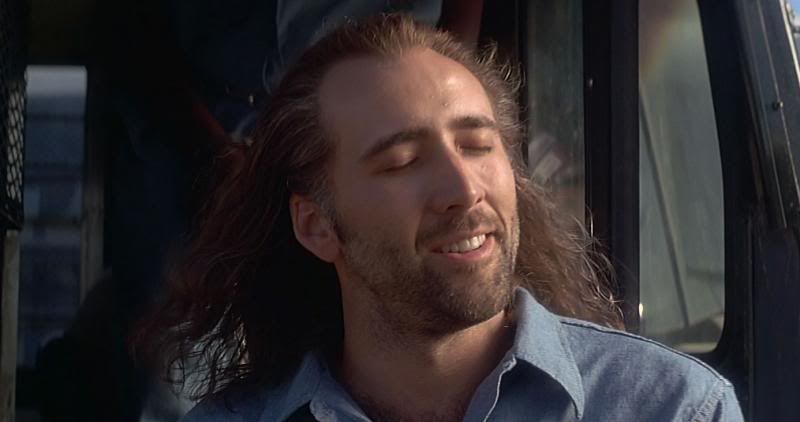
It's strange -- considering what this movie is -- that it features the most restrained Nicolas Cage performance of his career. Every movie needs a straight man, I guess, none more than this absolutely bonkers but fun as hell ensemble piece, complete with Bruckheimer co-opting of Veteran angst and never-leave-a-fallen-soldier-behind war movie heroism. The coup is that the war is the prison system and the hijacked plane is obviously America.


The Great Gatsby (Baz Luhrmann, 2013) [letterboxd capsule]
Oh, I see.
Money breeds superficiality.
But it's okay because love.
#yawn

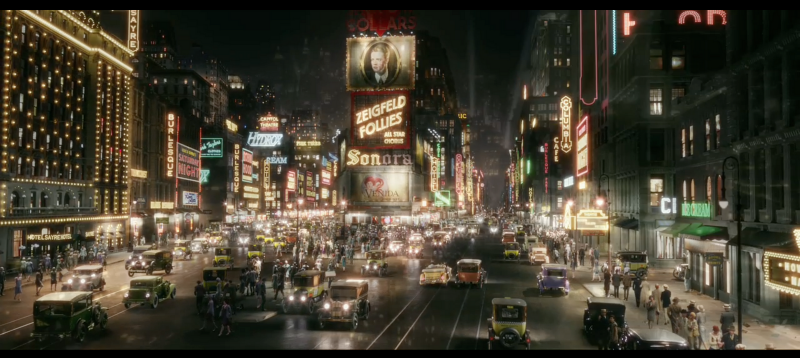
Luhrmann can't get over himself long enough to actually give a care about anything happening on screen besides making sure he looks like the most amazing visionary to ever tell this story, even though he clearly works against his own proud ends at every turn.  He is best when establishing big ideas like the era or the city, but the moment he has to hone in on an individual and show any amount of observation or subtlety, he loses it.  His biggest accomplishment here is finding a good art director who is clearly having a blast using a blank check to do whatever they want.  So, there's some decent scenery to look at but when it comes to narrative, character, and on-screen drama, we are given the most shallow of rudiments and expected to pretend this is the deepest ocean ever crossed.  


Hard Target (John Woo, 1993) [letterboxd capsule]
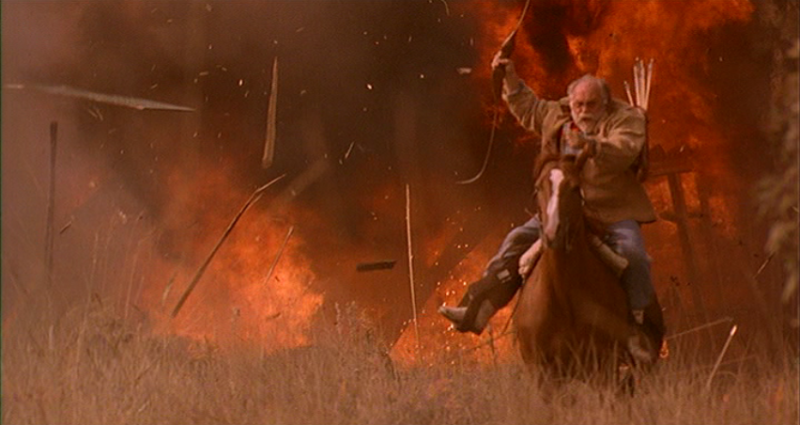
You may be cool, but you'll never be cajun Wilford Brimley  fleeing on horseback with his longbow in hand as his moonshine shack explodes behind him cool.


Reds (Warren Beatty, 1981) [letterboxd capsule]
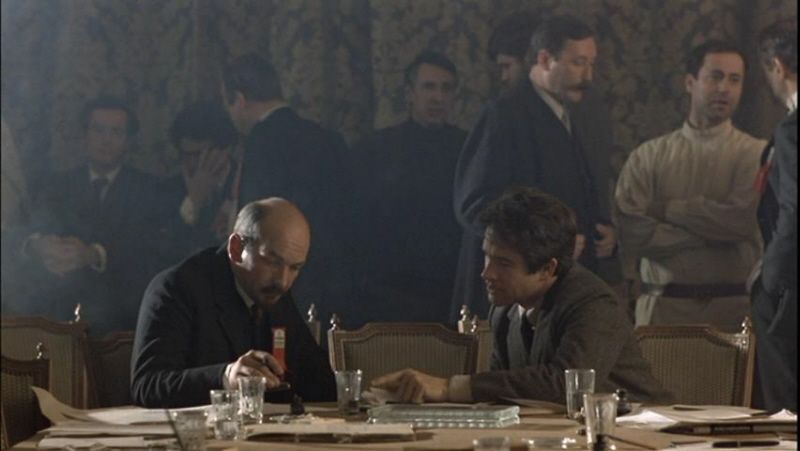
The death of idealism and the failure of political ideology.  If institutions become machines the people behind them will always be marginalized, whether the institution is a national government or marriage itself.  Warren Beatty proves to be one of the few celebrity-turned-directors to have the vision to helm epics like this.


Zero Dark Thirty (Kathryn Bigelow, 2012) [letterboxd capsule]
Somewhere underneath all of this is a movie about a government accountant who has to add up how much all of the labor, helicopters, military ops, phone taps, office space, surveillance and travel cost the US government to capture and kill one person.

Saturday, August 31, 2013

August 2013 -- Letterboxd Capsules

Basic Instinct (Paul Verhoeven, 1992) [letterboxd capsule]
A wonderfully stylish but ultimately unfulfilling mystery that hints at themes of sexual manipulation, Hitchcockian obsession, human nature and self-reflexive storytelling without ever committing itself to follow any of those lines very thoroughly.  Paul Verhoeven has never left me completely satisfied with anything that he’s made, likely due to his embrace of genre artifice at the expense of genre deconstruction.  His subversion is more on the surface –- an embracing of highly sexualized or violent subject matter and depiction, while avoiding the conceptual apparatus of commenting on those things through his cinematic depiction.  His films are made up of some wonderful moments and pieces, but are generally unfulfilling as a whole.  

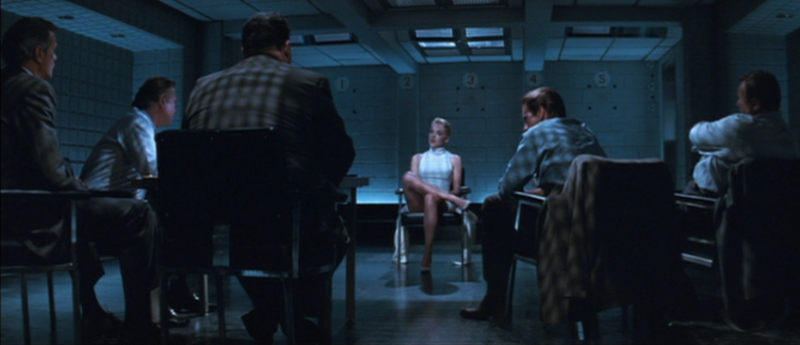
Basic Instinct features a frightening Sharon Stone performance and one amazing scene that demonstrates Verohoeven’s power as a manipulator, provocateur, stylist and storyteller: the infamous leg-crossing scene.  In that one scene Verohoeven has built a complex environment of sexism, objectification, sexual tension/frustration, rage, resentment, institutional manipulation, and narrative suspense that is unrivaled in everything else he has done.  The power shifts, the playful sensuality of Stone, the disarming move that gains her control of the whole room.  But, the narrative Joe Eszterhas and Verhoeven have woven around that essential scene is one of convolution, shallow thrills and easily spotted misdirection.  Also features one of the best film scores of the 1990’s.


Cool World (Ralph Bakshi, 1992) [letterboxd capsule]
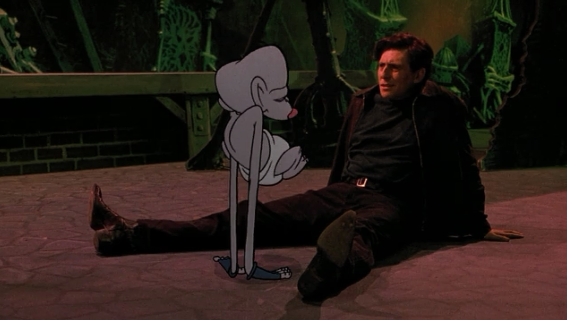
Bakshi wants so much to present an adult alternative to Disney that he forgets that simply subverting Disney without putting anything of substance in its place is a recipe in futility.  An utter mess of tone and content made only slightly watchable by Gabriel Byrne.


The Last of the Mohicans (Michael Mann, 1992) [letterboxd review]
Daniel Day-Lewis is fine, the score is superb and there is a nice incorporation of Hudson River school-esque locations but overall there's not much to say about this solid but unspectacular film.  


The Lost World: Jurassic Park (Steven Spielberg, 1997) [letterboxd capsule]
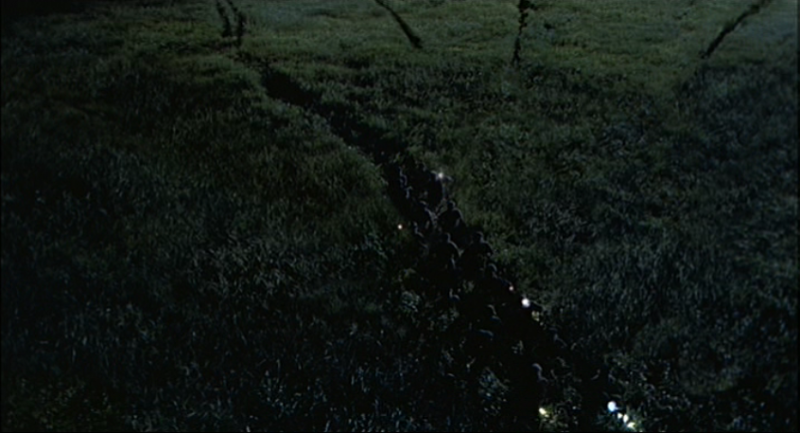
Spielberg still has the ability to create a few notable sequences (the raptors in the field and the glass window cracking over the cliff), but overall I have no idea what this movie is thinking.  Idiotic characters making bad decisions, a mishmash of tones and elements with a little corporate domination thrown in for good measure and the total loss of narrative stakes once they leave the island for the mainland.  Very disappointing considering there are dinosaurs, millions of dollars with Goldblum, Moore and Speilberg.


The Specialist (Luis Llosa, 1994) [letterboxd capsule]
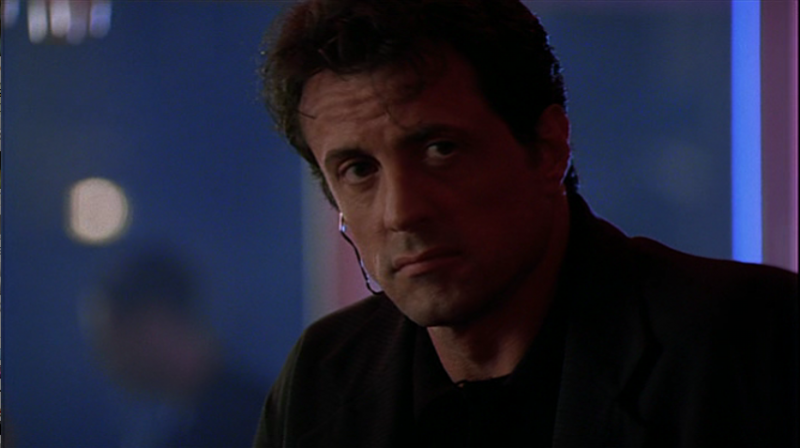
A quiet, nearly poetic misdirection that feels so much like a Miami summer night the fact that it eventually remembers to be an explosive actioner by the end nearly comes as a surprise.  James Woods is in manic form, with merciless verbal abuse showered on every extra or day player in his path.  Stallone takes himself seriously enough to give the film a strange contemplative air but Sharon Stone never quite finds her footing as a woman in distress/independent woman/femme fatale/red herring/serious love interest.  The narrative twists left her character pretty flat by the end, despite some really wonderful moments early on.  Overall, The Specialist is too interesting to dismiss completely but not satisfying enough to praise as a unified film.


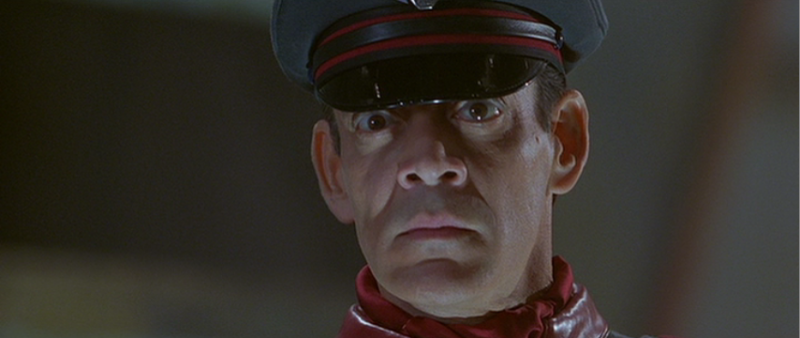
Street Fighter (Steven E. de Souza, 1994) [letterboxd capsule]
An awkward yet highly entertaining farce about the paradoxes of globalization and corporate fascism, wrapped in the superficial trappings of an adventure movie based on a martial arts video-game.  Raul Julia leaves this world with a bang, having the time of his life as General M. Bison, while Van Damme struggles with language (nevermind an American accent).


Wall Street: Money Never Sleeps (Oliver Stone, 2010) [letterboxd capsule]
Hey Oliver Stone: put down that metaphor before you hurt somebody.  Captivating at first before collapsing under its own weight.

Wednesday, June 19, 2013

The Refusal of Culpability in 'Flight' (2012)

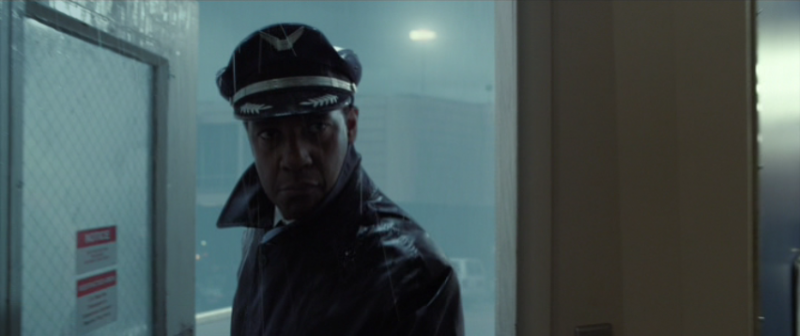
Flight (Robert Zemeckis, 2012)
No one likes to take responsibility for the bad things that happen.  It is easiest to blame someone else.  We accept accolades for success but always shift the blame for the failures.  If that is true of individuals it is just as true of the institutions we build.  Families, governments, corporations, schools, even churches.  It is the root of social diseases ranging from extraneous litigation to alcoholism.  In that way, Flight is pertinent and hard-hitting.  Not just because it deals with alcohol addiction, but because it deals with the root of addiction: the refusal of culpability.  And, even though it paints a far-reaching societal portrait, it is also bold enough to admit that there is a way beyond it.  

Tuesday, June 18, 2013

The Color Wheel (2011)

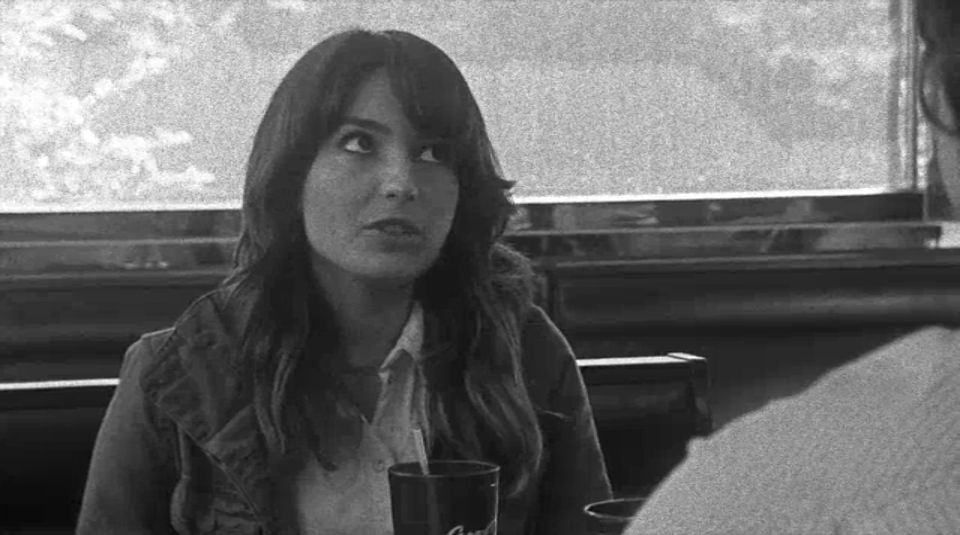
The Color Wheel (Alex Ross Perry, 2011)
There is a moment about a third of the way into The Color Wheel where Colin's thoughts toward his sister are summarized in the statement, "You've always been a hot commodity in the world of perverts."  Not that his insults are one-sided, as the entire relationship of this brother and sister is based on their annoyance with one-another and the ability to place uniquely searing insults at the feet of the other.  Colin lambasts J.R. mostly for her failed dreams of being a news anchor and her taste in men (most recently illustrated in her affair with a broadcasting professor); J.R. lambasts Colin for his apathy and lack of imagination.  But, as the story unfolds, it turns out that J.R. and Colin -- as cruel as they are to one another -- are only slightly less cruel than the world of their fairly privileged bubble.