Saturday, February 28, 2015

February 2015 - MDP Film Journal

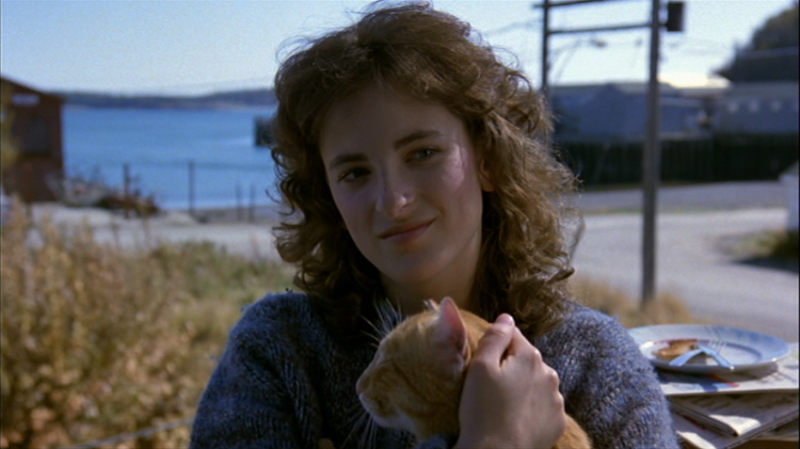
Presumed Innocent (Alan J. Pakula, 1990)
Continuing the 90s viewings but most of my new viewings weren't that great. I was more successful with the rewatches. 

Best of February 2015
1.  Presumed Innocent (Alan J. Pakula, 1990)
2.  Galaxy Quest (Dean Parisot, 1999)
2.  Runaway Train (Andrei Konchalovsky, 1985)

Favorite Rewatches of February 2015
The Lion King (Rogers Allers & Rob Minkoff, 1994)
Glengarry Glen Ross (James Foley, 1992)
Aladdin (Ron Clements & John Musker, 1992)
Bulworth (Warren Beatty, 1998)
The Avengers (Joss Whedon, 2012)
The X-Files (Rob Bowman, 1998)

Films watched in February: 16
Rewatches in February: 8
Total tally for 2015: 31

(I'm borrowing this format idea from Curtsies and Hand Grenades.)

Friday, January 30, 2015

January 2015 - MDP Film Journal

Can't Hardly Wait (Deborah Kaplan & Harry Elfont, 1998)
The 90s has been my main cinematic focus and will continue to be for the next few months. I didn't squeeze in a ton of movies in January but here are the highlights.

Best of January 2015
1.  Through the Olive Trees (Abbas Kiarostami, 1994)
2.  L'Enfer (Claude Chabrol, 1994)
3.  Hobson's Choice (David Lean, 1954)
4.  Metropolitan (Whit Stillman, 1996)
5.  Godzilla (GAreth Edwards, 2014)

Favorite Rewatches of January 2015
Can't Hardly Wait (Deborah Kaplan & Harry Elfont, 1998)

Films watched in January: 15
Rewatches in January: 2
Total tally for 2015: 15

(I'm borrowing this format idea from Curtsies and Hand Grenades.)

Friday, January 24, 2014

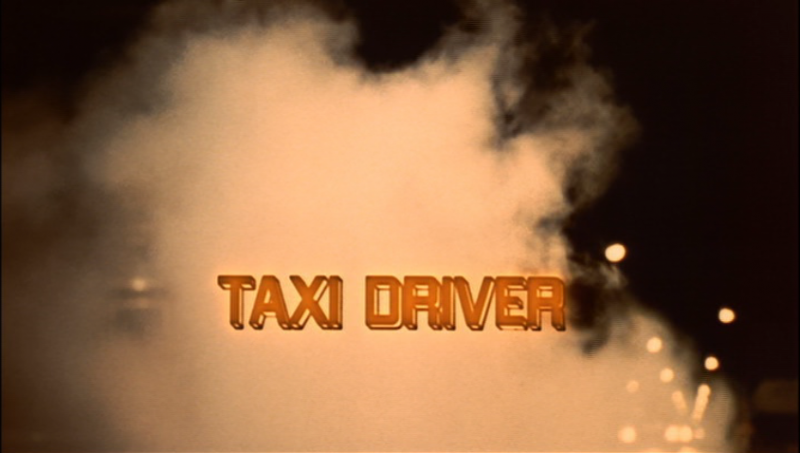
Apocalyptic Nighttime: Taxi Driver (1976)

One of the most beautiful title cards in the history of cinema, Scorsese's Taxi Driver links us not only to the seedy grindhouse,
with its fading yellow-orange font, but also to the grand moviehouses of Hollywood's golden age, with its iconic Bernard Hermann score.
Taxi Driver (Martin Scorsese, 1976)
I can see the moment in Scorsese's career where he steps confidently into the role of a great director: the gun purchasing scene in Taxi Driver.  Seen through the singular point of view of Travis as he eyes each gun, with a particularly beautiful pan across the .44, the salesman talks and talks about the benefits of every gun and we stay on Travis as he feels the gun in his hand, following his sightline out the window, across the city, over the freeway and to a couple of pedestrians milling about on the sidewalk several stories below.  No click of an empty chamber.  No comment about the scum. We have no clue where this is going or how far, but we know everything in this world is wrong and it is frightening to imagine what Travis may end up doing.  When he points the gun out the window, the camera's lens is focused on the outside, not the gun.  We feel his mind, even though we do not know it through narration.  
Our hero, imagined: insulated with words, overlooking the city, violence brewing.  A prophet of rage seeks for his voice.

Friday, January 17, 2014

2013 Oscars: Predictions Recap


Now that they have made the official announcements for the 2013 Academy Award nominations, let's see how I did in my predictions. 

86th Academy Awards
BEST PICTURE 7/9
12 Years a Slave
American Hustle
Blue Jasmine  Nebraska
Captain Phillips
Dallas Buyers Club
Gravity
Her
Inside Llewyn Davis  Philomena
Lee Daniels' The Butler
The Wolf of Wall Street
3 things: 
1) What gives with the 9 nominations?  I don't think I read a single prediction that claimed there would be less than 10 nominees.  Not sure what the criteria is but there must be some quota of votes that must be met after which a film is eligible for the nom.  
2) I was very surprised by the support for Nebraska.  An earlier iteration of my list included Philomena, though I've heard so little about the film besides Dench that I hesitated and took it out.  
3) I had assumed the unstoppable Weistein machine would force a nomination for The Butler but thankfully, for the sake of posterity, I was wrong.  I can still see all the nominees without having to watch Lee Daniels' The Butler, which I consider a win.

BEST DIRECTOR 4/5
Alfonso Cuaron (Gravity)
Paul Greengrass (Captain Phillips)  Alexander Payne (Nebraska)
Steve McQueen (12 Years a Slave)
David O. Russell (American Hustle)
Martin Scorsese (The Wolf of Wall Street)
I figured Greengrass was the wildcard of my picks but also assumed if the Academy varied from the DGA, it would pick Llewyn Davis next.  As mentioned above, Nebraska's support was surprising to me, though Payne also got a Globe nod so its not completely out of left field. 


Monday, January 13, 2014

2013 Oscars: Nominee Predictions

I used to do this all the time when I was in high school.  I haven't done it since college.  These are the movies/performances I think will get Academy Award nominations when the announcements are made January 16, 2014.

86th Academy Awards
BEST PICTURE
12 Years a Slave
American Hustle
Blue Jasmine
Captain Phillips
Dallas Buyers Club
Gravity
Her
Inside Llewyn Davis
Lee Daniels' The Butler
The Wolf of Wall Street

BEST DIRECTOR
Alfonso Cuaron (Gravity)
Paul Greengrass (Captain Phillips)
Steve McQueen (12 Years a Slave)
David O. Russell (American Hustle)
Martin Scorsese (The Wolf of Wall Street)

BEST ACTOR
Bruce Dern (Nebraska)
Chiwetel Ejiofor (12 Years a Slave)
Tom Hanks (Captain Phillips)
Matthew McConaughey (Dallas Buyers Club)
Robert Redford (All is Lost)

BEST ACTRESS
Cate Blanchett (Blue Jasmine)
Sandra Bullock (Gravity)
Judi Dench (Philomena)
Meryl Streep (August: Osage County)
Emma Thompson (Saving Mr. Banks)

Thursday, December 12, 2013

Mud (2012) and the Shipwreck of Southern Masculinity

Mud (Jeff Nichols, 2012)
Few contemporary filmmakers have nailed an atmospheric sense of place as certainly as Jeff Nichols has.  The South in Mud is dirty, ragged, barely welded together by a guy in a garage, but it still runs.  That's not the whole picture, and Nichols doesn't pretend it is, but it is the existential reality of these particular characters.  They continue to embrace it and therein find their identity.  "I ain't no townie," Ellis tells his dad when told he will be moving to town after his parents split up.  His dad understands but finds himself helpless to do anything different.  Matter of fact, it looks like he's always found himself a little overwhelmed by the basic responsibilities of life.
Talking.  
Loving.  
Giving.  
Listening.  
These aren't things Senior is particularly good at.  
And soon he will pass a lineage of brooding silence onto his boy.
Ellis is a romantic.  It's easy to figure Senior probably was too, once.  He will learn the way of his father through heartbreak.
The most evocative shot in the film.  The stoicism of the southern male exemplified.  

Monday, December 9, 2013

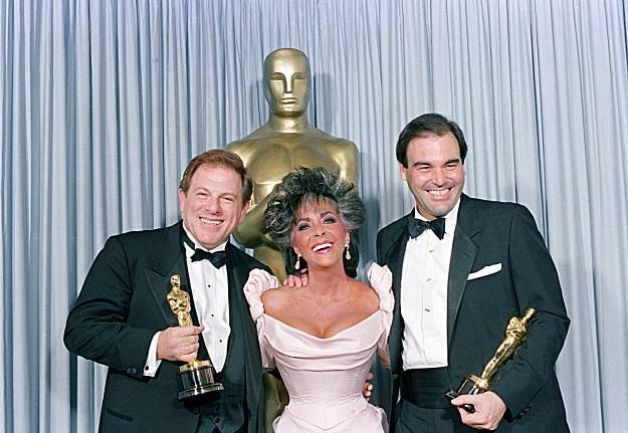
Judging Oscar: 1986

For other years completed in this project see the purple Judging Oscar links in the sidebar ----------------------->


BEST PICTURE

WINNER: Platoon (Oliver Stone, 1986)
Stone takes the WWII movie and puts it in Vietnam.  There are a couple of decent setpieces but overall, I don’t find anything particularly noteworthy about it apart from this being the only major Vietnam movie that was directed by an actual Vietnam veteran.  Willem Dafoe and Tom Berenger are very good as the dueling Sergeants with differing philosophies of warfare and leadership, and that dynamic really is the most gripping part of the film.  This comes to a head in the film’s best scene: a tiny farming village where the distrustful GI barge in and begin to emotionally and, later, physically torture several South Vietnamese civilians because they are believed to be untrustworthy in their association with a battalion of Vietcong.  Led by the malicious Sgt. Barnes (Berenger), even Chris Taylor (Sheen) gets in on the hostilities before Sgt. Elias (Dafoe) steps in and puts an end to the madness.  It is a good scene and Stone certainly doesn’t shy away from some of the other secret realities of the war (drug use, racism, classism, disenchantment, distrust of authority), but it also doesn’t add up to much more than a slightly interesting shrug.  Thankfully, this is before Stone got swept away with his fractured patchwork aesthetic of the 90’s, so the film actually maintains a consistent point-of-view and shows some understanding of screen geography, even if it lacks the associative power of his post-JFK work.

Friday, December 6, 2013

Judging Oscar: 1994

I have recently watched or re-watched all the films nominated for Best Picture and Best Director from 1994.  I have placed a value judgment on what I saw cinematically.  I may one day have breakdowns for every year of the Oscars, but I have not gotten very far into this journey yet.  You can follow up on the years I have completed so far: 1973, 1975, 1980 and 1996.


BEST PICTURE

WINNER: Forrest Gump (Robert Zemeckis, 1994)
If you grew up during the 90’s, you could not escape Forrest Gump.  It was inevitable.  In my world, it was universally loved and I confess I have been systematically predisposed to like this movie ever since I saw it in the theater at age 11.  Maybe it is the desire to “get to my roots” through popular cinema (boomer parents, small southern hometown), maybe its because the soundtrack was on repeat for years in my room, maybe its because I related to Gump in a way I related to few other movie characters.  Whatever the case, I have loved this film since childhood and when I watch it today, I find I still love it and that it only deepens as I examine the movie closer.  Whatever the major effect the film had on American culture at large, I see in the film a unique skewering of American exceptionalism through the narrative of a guileless individual who is shamelessly exploited by a variety of individuals and social institutions yet maintains a loyalty to the handful of people who have ever shown him interest, in spite of his low IQ and naïveté.  The character of Forrest Gump is essentially a blank slate that viewers project their own feelings and nostalgia upon.  To me, it is a glorious picaresque that succeeds thanks to the charismatic humanism of Tom Hanks and the over-arching relatability of Zemeckis’ cinematic techniques.  Forrest is not without agency but he is without cynicism.  It is his guileless loyalty and lack of cynicism that has made the film seem sentimentalized when it fairly earns its emotional climaxes; likewise, Gump’s accidental wealth and fame countered by Jenny’s failed endeavors have made liberal critics spurn the movie for not being an ode to the 60’s counterculture.  It seems people are still projecting their own objectives upon the life of Forrest Gump and the fact that the film lets you do so is testament to its endearing greatness.

Saturday, November 30, 2013

November 2013 -- Letterboxd Capsules

The Abyss (James Cameron, 1989) [letterboxd capsule]
I can think of several ways the movie could be more satisfying, but the truth is, after the death/resurrection/emotional climax, Cameron had nowhere else to go except into the pit. The theatrical version cuts his hokeyness a bit (thankfully), but it would never satisfy so long as he was committed to bringing us into direct contact with the aliens one last time. He forces them to become a contrived plot point rather than a mysterious texture.

Thankfully, there's lots of sturdy suspense and memorable setpieces leading up to that moment so the film still works for me overall.


Aliens (James Cameron, 1986) [letterboxd capsule]
There is a raw, relentless physicality to this that makes the film particularly intense.  The death of Vazquez has always resonated with me in a strange way.  The pain in her voice when she cries out "oh no" after being paralyzed by an acid burn on her leg....it's more than just imminent death, it is the deep sting of failure.


Any Given Sunday (Oliver Stone, 1999) [letterboxd capsule]
Stone's overwrought professional football movie is very entertaining (I've seen the film several times even though I don't think it's that great) but it thinks it is way more insightful and observant than it truly is.  Add to that Stone getting a little carried away with his collage style editing and some frustratingly thin characterizations.  I think Jerry Maguire played the changing-face-of-pro-sports-in-the-90's card way better, though it is fun to watch Al Pacino scream at Cameron Diaz.

Thursday, November 14, 2013

Choose Your Dream: The Bling Ring's (2013) Wasteland of Teenage Idolatry

The Bling Ring (Sophia Coppola, 2013)
It is such an unusual and shocking thing: bored teenagers of privilege sneaking into the homes of particular celebrities and stealing their clothes.  If it seems foolish and vapid and narcissistic, it is.  But such is the culture of celebrity idolatry America has manufactured, and such is the hope of wildest dream fulfillment bestowed upon it's children by well-meaning but misguided parents.  Sophia Coppola sees all of it.  And instead of building a tired, pointed and moralistic tirade against it, she has crafted a brilliant observational satire that exposes the complex sociological consequences that enable not only the existence of something like TMZ, but the ubiquity of it's tabloid interests.  She also finds a more frightening cause lurking below the surface.

Tuesday, November 5, 2013

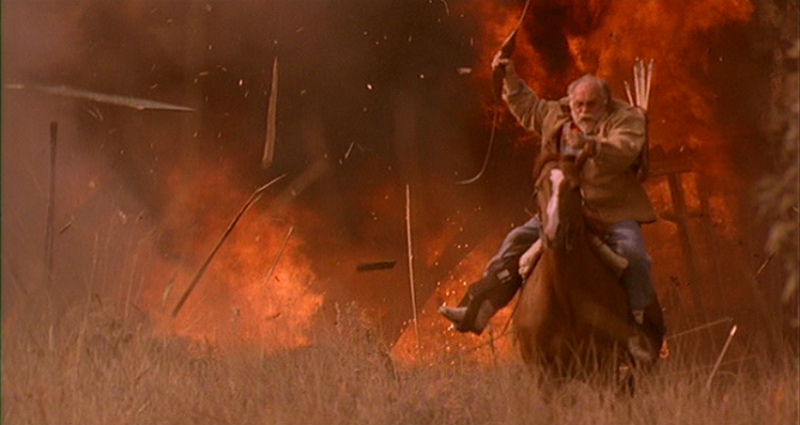
Wilford Brimley in Hard Target (1993)

Unsung Performances of the 90's: Wilford Brimley
In Hard Target (1993), John Woo gave character actor Wilford Brimley one of his strangest supporting roles ever, cajun moonshiner, Uncle Douvee.  He enjoys his homemade liquor, helps patch up our hero, uses his archery skills to aid the hero in his plight and flees on horseback as his moonshine shack is blown to smithereens by the ruthless bad guys.  Brimley mumbles, speaks gibberish and laughs in-between those plot points, providing a strangely comic counterpoint to the absurdist action that has come before.  True, it is a performance of histrionics and externals, but the whole film is built as a histrionic re-working of the beats of the Hollywood action film.  

This is a pictoral appreciation of that character and performance.


Thursday, October 31, 2013

October 2013 -- Letterboxd Capsules

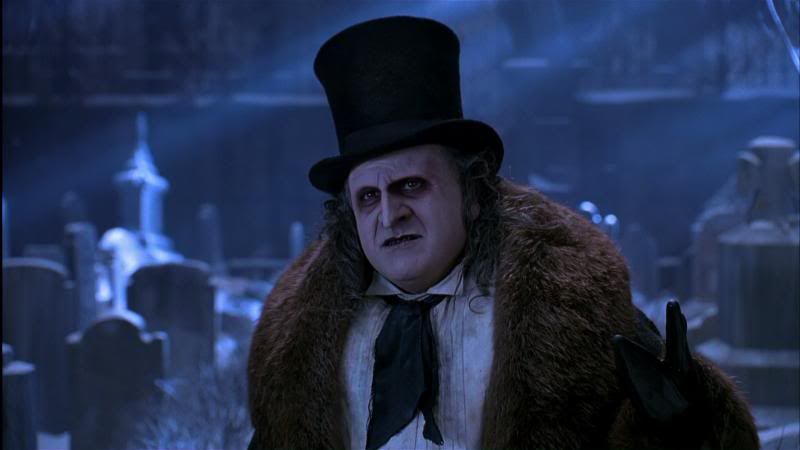
Batman Returns (Tim Burton, 1992) [letterboxd capsule]
Gosh, Burton is easily the most overrated of the Hollywood auteurs still milling about the system, but this is just such a fun, beautiful, easily re-watchable movie that I have to say a few things about it. Before bailing on the franchise he reinvigorated, he gives us the apotheosis of the short-lived 90's comic book sub-genre and a brilliantly designed deconstruction of gender politics that masquerades as a rather obvious deconstruction of civil politics. 

Who knew Catwoman was going to be the embodiment of female rage and systematic marginalization (she literally shatters a glass ceiling, twice)? She is the true working class hero. Sure, Penguin may have started with nothing, but he has acquired enough loot over the course of his criminal life to afford to build cute little rocket packs to outfit his penguin militia; Selina Kyle hand weaves her own costume from stuff in her closet, for crying out loud! Plus, Penguin embraces the usual chauvinist triumverant of sex, money, power while Catwoman has just finally been pushed too far by a system of repression.

Batman's looseness with his true identity is finally justified by his isolation, insecurity and aching need for companionship. This goes unrequited because he has met a woman who needs no man and now has only one life left to live. In the end, all he gets is Alfred and the hopeful acquisition of her spirit animal. Such a weird, awesome movie that is so much better than the '89 Batman it's not even funny (though Nicholson will always be the crowning achievement of that film). This is a more fully satisfying narrative, goes deeper thematically with better design, better performances (I never even mentioned DeVito playing with whole-hearted abandon, the role he was, strangely, destined to play), a better ensemble and Burton even gets to throw in his carnival of doom without upsetting the balance. Borderline masterpiece of 90's pop art cinema.


Behind the Candelabra (Steven Soderbergh, 2013) [letterboxd capsule]
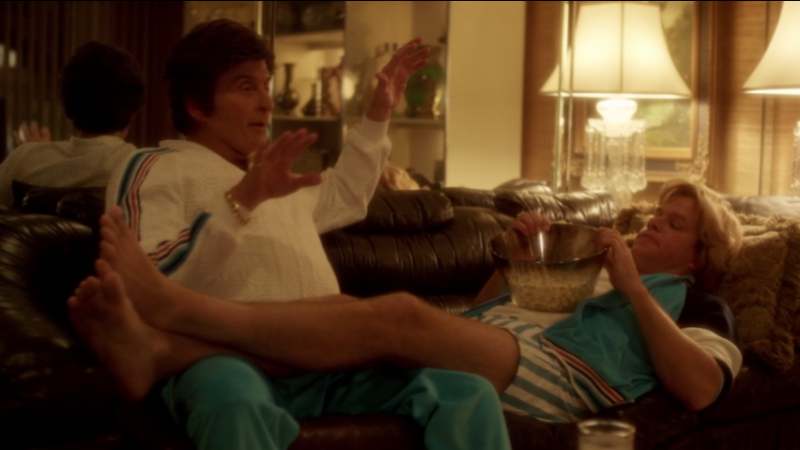
This is what happens when a fascinating historical figure, a complex dramatic situation and game performances by two star actors get co-opted by a particular political zeitgeist.  What begins promising enough as a revelation of show business excess and domineering control ends squarely in the territory of dime-a-dozen biopic.  If it wasn't so self-consciously trying to hold up a marriage equality platform, it might have been able to deal with the paradoxical realities of Liberace's relationship with Scott Thompson and the legal complications that it brought about.  It's not that there isn't enough interest in these characters.  I mean, there is a scene where Liberace insists Thompson get plastic surgery so that he can look more like a young Liberace.  There is more than enough interesting material to mine here but unfortunately it all seems very tritely headed toward a "if only they could have been married then Thompson could have gotten a fair deal in court" resolution.  Maybe that's the only way this movie could get financed but oh, what could have been...


Con Air (Simon West, 1997) [letterboxd capsule]
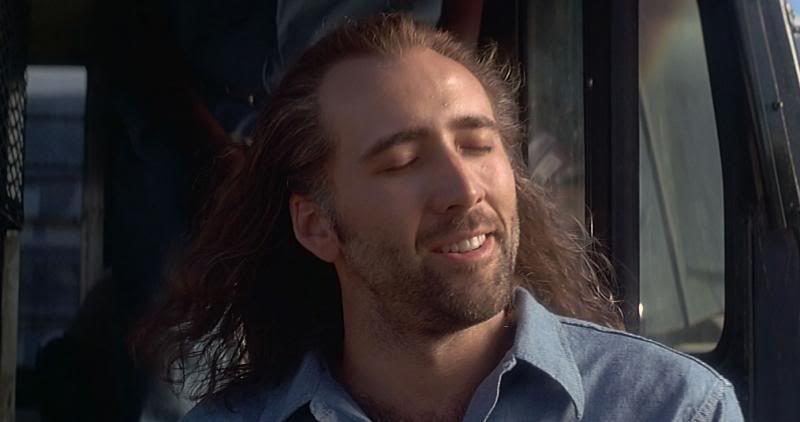
It's strange -- considering what this movie is -- that it features the most restrained Nicolas Cage performance of his career. Every movie needs a straight man, I guess, none more than this absolutely bonkers but fun as hell ensemble piece, complete with Bruckheimer co-opting of Veteran angst and never-leave-a-fallen-soldier-behind war movie heroism. The coup is that the war is the prison system and the hijacked plane is obviously America.


The Great Gatsby (Baz Luhrmann, 2013) [letterboxd capsule]
Oh, I see.
Money breeds superficiality.
But it's okay because love.
#yawn

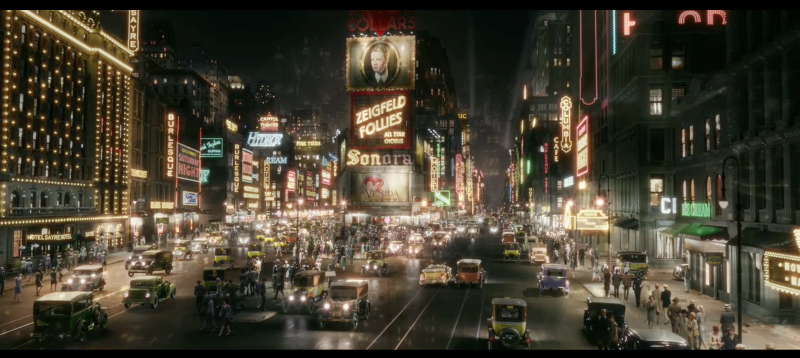
Luhrmann can't get over himself long enough to actually give a care about anything happening on screen besides making sure he looks like the most amazing visionary to ever tell this story, even though he clearly works against his own proud ends at every turn.  He is best when establishing big ideas like the era or the city, but the moment he has to hone in on an individual and show any amount of observation or subtlety, he loses it.  His biggest accomplishment here is finding a good art director who is clearly having a blast using a blank check to do whatever they want.  So, there's some decent scenery to look at but when it comes to narrative, character, and on-screen drama, we are given the most shallow of rudiments and expected to pretend this is the deepest ocean ever crossed.  


Hard Target (John Woo, 1993) [letterboxd capsule]
You may be cool, but you'll never be cajun Wilford Brimley  fleeing on horseback with his longbow in hand as his moonshine shack explodes behind him cool.


Reds (Warren Beatty, 1981) [letterboxd capsule]
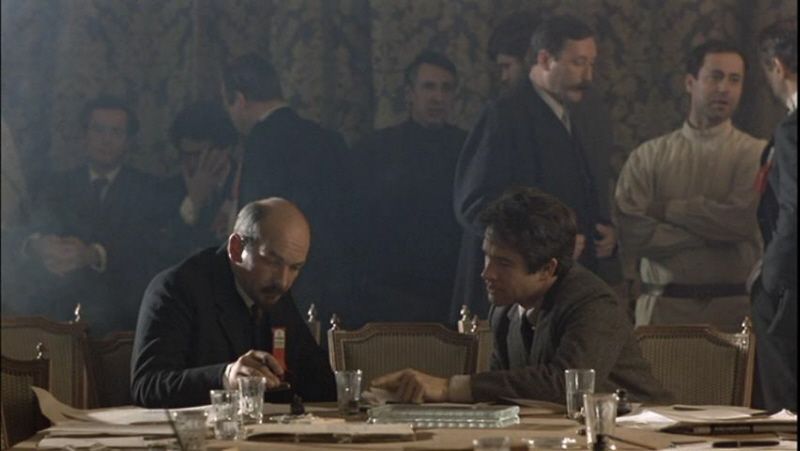
The death of idealism and the failure of political ideology.  If institutions become machines the people behind them will always be marginalized, whether the institution is a national government or marriage itself.  Warren Beatty proves to be one of the few celebrity-turned-directors to have the vision to helm epics like this.


Zero Dark Thirty (Kathryn Bigelow, 2012) [letterboxd capsule]
Somewhere underneath all of this is a movie about a government accountant who has to add up how much all of the labor, helicopters, military ops, phone taps, office space, surveillance and travel cost the US government to capture and kill one person.