Thursday, October 31, 2013

October 2013 -- Letterboxd Capsules

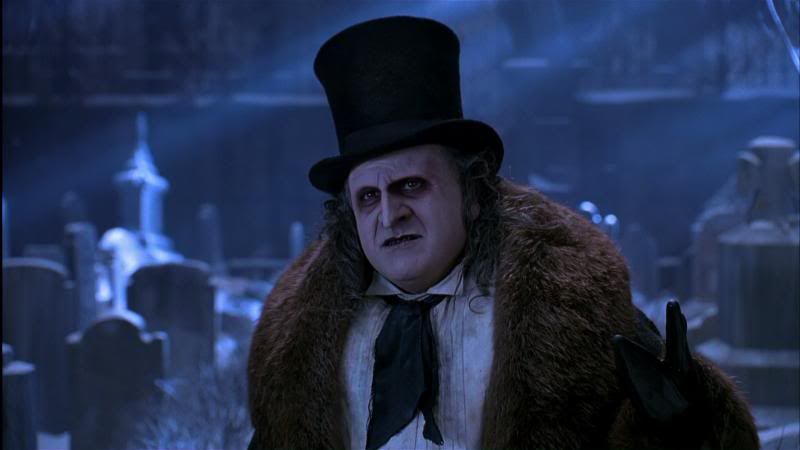
Batman Returns (Tim Burton, 1992) [letterboxd capsule]
Gosh, Burton is easily the most overrated of the Hollywood auteurs still milling about the system, but this is just such a fun, beautiful, easily re-watchable movie that I have to say a few things about it. Before bailing on the franchise he reinvigorated, he gives us the apotheosis of the short-lived 90's comic book sub-genre and a brilliantly designed deconstruction of gender politics that masquerades as a rather obvious deconstruction of civil politics. 

Who knew Catwoman was going to be the embodiment of female rage and systematic marginalization (she literally shatters a glass ceiling, twice)? She is the true working class hero. Sure, Penguin may have started with nothing, but he has acquired enough loot over the course of his criminal life to afford to build cute little rocket packs to outfit his penguin militia; Selina Kyle hand weaves her own costume from stuff in her closet, for crying out loud! Plus, Penguin embraces the usual chauvinist triumverant of sex, money, power while Catwoman has just finally been pushed too far by a system of repression.

Batman's looseness with his true identity is finally justified by his isolation, insecurity and aching need for companionship. This goes unrequited because he has met a woman who needs no man and now has only one life left to live. In the end, all he gets is Alfred and the hopeful acquisition of her spirit animal. Such a weird, awesome movie that is so much better than the '89 Batman it's not even funny (though Nicholson will always be the crowning achievement of that film). This is a more fully satisfying narrative, goes deeper thematically with better design, better performances (I never even mentioned DeVito playing with whole-hearted abandon, the role he was, strangely, destined to play), a better ensemble and Burton even gets to throw in his carnival of doom without upsetting the balance. Borderline masterpiece of 90's pop art cinema.
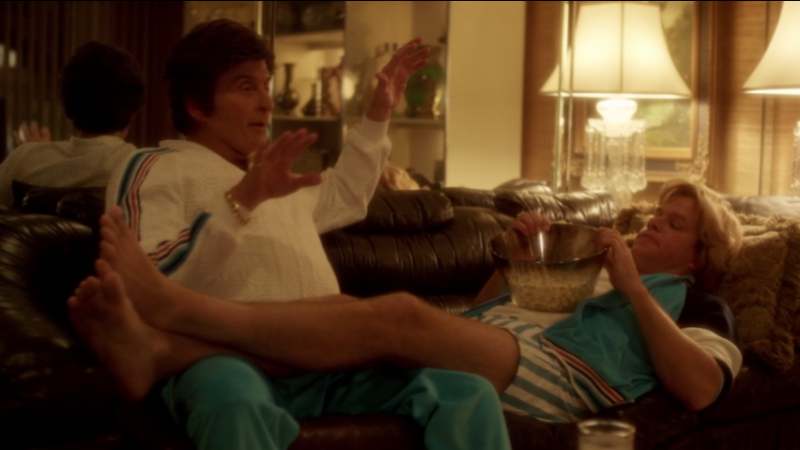

Behind the Candelabra (Steven Soderbergh, 2013) [letterboxd capsule]
This is what happens when a fascinating historical figure, a complex dramatic situation and game performances by two star actors get co-opted by a particular political zeitgeist.  What begins promising enough as a revelation of show business excess and domineering control ends squarely in the territory of dime-a-dozen biopic.  If it wasn't so self-consciously trying to hold up a marriage equality platform, it might have been able to deal with the paradoxical realities of Liberace's relationship with Scott Thompson and the legal complications that it brought about.  It's not that there isn't enough interest in these characters.  I mean, there is a scene where Liberace insists Thompson get plastic surgery so that he can look more like a young Liberace.  There is more than enough interesting material to mine here but unfortunately it all seems very tritely headed toward a "if only they could have been married then Thompson could have gotten a fair deal in court" resolution.  Maybe that's the only way this movie could get financed but oh, what could have been...
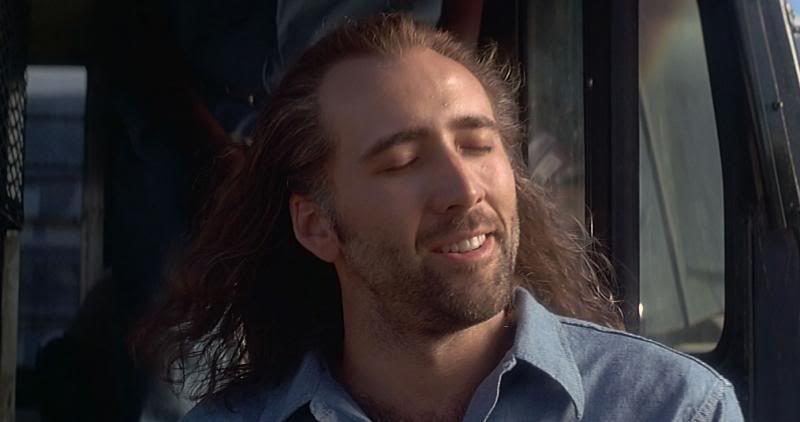

Con Air (Simon West, 1997) [letterboxd capsule]
It's strange -- considering what this movie is -- that it features the most restrained Nicolas Cage performance of his career. Every movie needs a straight man, I guess, none more than this absolutely bonkers but fun as hell ensemble piece, complete with Bruckheimer co-opting of Veteran angst and never-leave-a-fallen-soldier-behind war movie heroism. The coup is that the war is the prison system and the hijacked plane is obviously America.
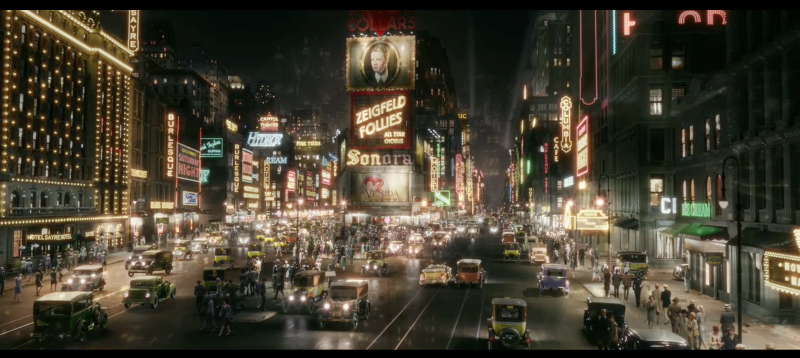

The Great Gatsby (Baz Luhrmann, 2013) [letterboxd capsule]
Oh, I see.
Money breeds superficiality.
But it's okay because love.
#yawn

Luhrmann can't get over himself long enough to actually give a care about anything happening on screen besides making sure he looks like the most amazing visionary to ever tell this story, even though he clearly works against his own proud ends at every turn.  He is best when establishing big ideas like the era or the city, but the moment he has to hone in on an individual and show any amount of observation or subtlety, he loses it.  His biggest accomplishment here is finding a good art director who is clearly having a blast using a blank check to do whatever they want.  So, there's some decent scenery to look at but when it comes to narrative, character, and on-screen drama, we are given the most shallow of rudiments and expected to pretend this is the deepest ocean ever crossed.  
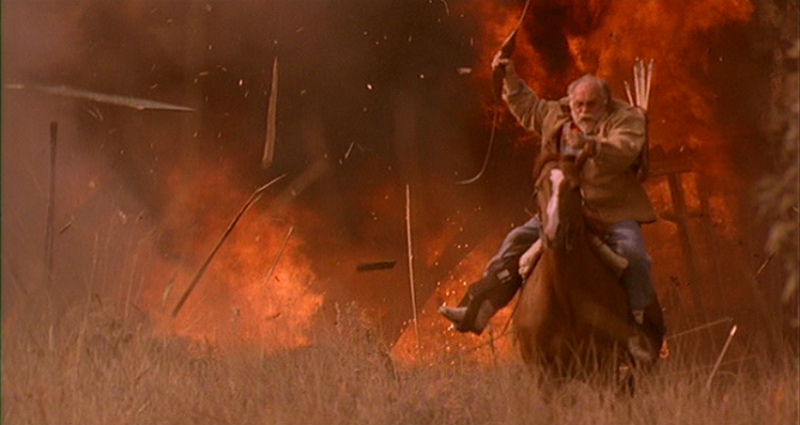

Hard Target (John Woo, 1993) [letterboxd capsule]
You may be cool, but you'll never be cajun Wilford Brimley  fleeing on horseback with his longbow in hand as his moonshine shack explodes behind him cool.
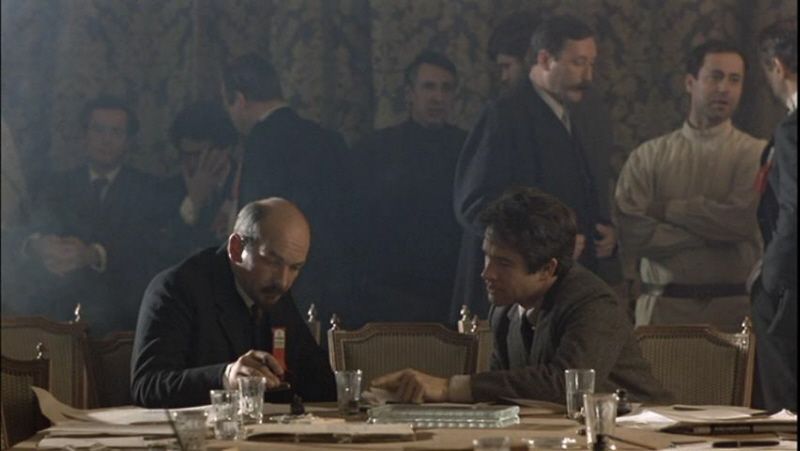

Reds (Warren Beatty, 1981) [letterboxd capsule]
The death of idealism and the failure of political ideology.  If institutions become machines the people behind them will always be marginalized, whether the institution is a national government or marriage itself.  Warren Beatty proves to be one of the few celebrity-turned-directors to have the vision to helm epics like this.


Zero Dark Thirty (Kathryn Bigelow, 2012) [letterboxd capsule]
Somewhere underneath all of this is a movie about a government accountant who has to add up how much all of the labor, helicopters, military ops, phone taps, office space, surveillance and travel cost the US government to capture and kill one person.

Monday, September 30, 2013

September 2013 -- Letterboxd Capsules

Panic Room (David Fincher, 2002) [letterboxd capsule]
Fincher is still feeling his way through the merging of digital flourish within a narrative/suspense framework.  There is plenty of tension/release ratcheting action, but in service of what exactly?  An allegory for how hard it is to apartment hunt in NYC?  Fincher finds some right notes for the isolation and dread of the city and Forest Whitaker is always worth watching.  Not wholly satisfying but plenty entertaining.


The Running Man (Paul Michael Glaser, 1987) [letterboxd capsule]
Everything a sardonic 80's sci-fi satire should be, complete with main character accents that hint at future globalization within the framework of entertainment fascism.  The best aspects of Bartel's Death Race 2000 (1975) and Klein's Mr. Freedom (1969) are distilled into a deeply entertaining mixture headlined by golden era Schwarzenegger and peppered by Jesse Ventura's mustache.  "Mr. Reynolds, I am your court-appointed theatrical agent," has to be one of the best guffaw-inducing lines I've stumbled across from this era.


Saturday, August 31, 2013

August 2013 -- Letterboxd Capsules

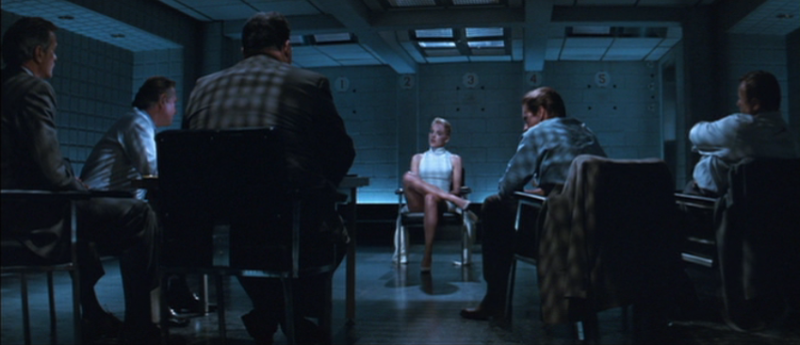
Basic Instinct (Paul Verhoeven, 1992) [letterboxd capsule]
A wonderfully stylish but ultimately unfulfilling mystery that hints at themes of sexual manipulation, Hitchcockian obsession, human nature and self-reflexive storytelling without ever committing itself to follow any of those lines very thoroughly.  Paul Verhoeven has never left me completely satisfied with anything that he’s made, likely due to his embrace of genre artifice at the expense of genre deconstruction.  His subversion is more on the surface –- an embracing of highly sexualized or violent subject matter and depiction, while avoiding the conceptual apparatus of commenting on those things through his cinematic depiction.  His films are made up of some wonderful moments and pieces, but are generally unfulfilling as a whole.  

Basic Instinct features a frightening Sharon Stone performance and one amazing scene that demonstrates Verohoeven’s power as a manipulator, provocateur, stylist and storyteller: the infamous leg-crossing scene.  In that one scene Verohoeven has built a complex environment of sexism, objectification, sexual tension/frustration, rage, resentment, institutional manipulation, and narrative suspense that is unrivaled in everything else he has done.  The power shifts, the playful sensuality of Stone, the disarming move that gains her control of the whole room.  But, the narrative Joe Eszterhas and Verhoeven have woven around that essential scene is one of convolution, shallow thrills and easily spotted misdirection.  Also features one of the best film scores of the 1990’s.


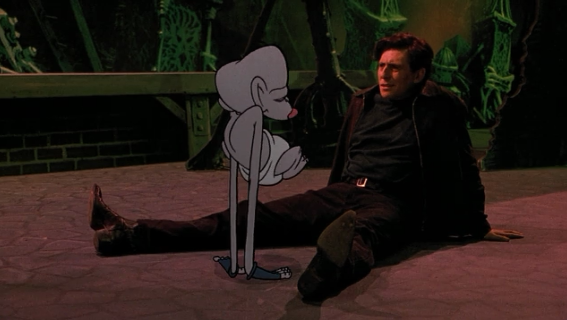
Cool World (Ralph Bakshi, 1992) [letterboxd capsule]
Bakshi wants so much to present an adult alternative to Disney that he forgets that simply subverting Disney without putting anything of substance in its place is a recipe in futility.  An utter mess of tone and content made only slightly watchable by Gabriel Byrne.


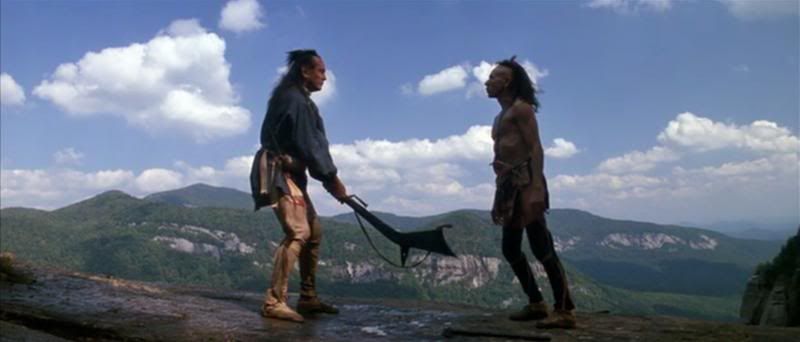
The Last of the Mohicans (Michael Mann, 1992) [letterboxd review]
Daniel Day-Lewis is fine, the score is superb and there is a nice incorporation of Hudson River school-esque locations but overall there's not much to say about this solid but unspectacular film.  


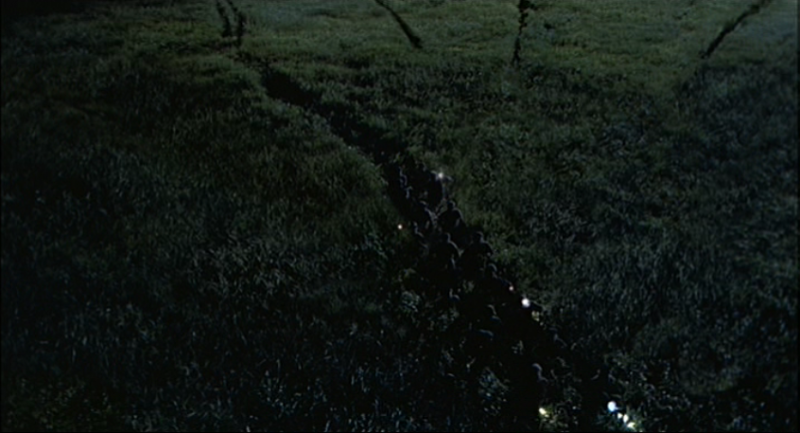
The Lost World: Jurassic Park (Steven Spielberg, 1997) [letterboxd capsule]
Spielberg still has the ability to create a few notable sequences (the raptors in the field and the glass window cracking over the cliff), but overall I have no idea what this movie is thinking.  Idiotic characters making bad decisions, a mishmash of tones and elements with a little corporate domination thrown in for good measure and the total loss of narrative stakes once they leave the island for the mainland.  Very disappointing considering there are dinosaurs, millions of dollars with Goldblum, Moore and Speilberg.


The Specialist (Luis Llosa, 1994) [letterboxd capsule]
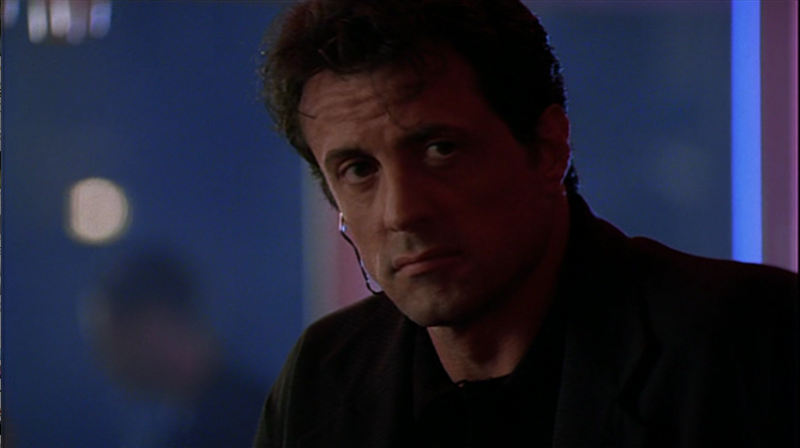
A quiet, nearly poetic misdirection that feels so much like a Miami summer night the fact that it eventually remembers to be an explosive actioner by the end nearly comes as a surprise.  James Woods is in manic form, with merciless verbal abuse showered on every extra or day player in his path.  Stallone takes himself seriously enough to give the film a strange contemplative air but Sharon Stone never quite finds her footing as a woman in distress/independent woman/femme fatale/red herring/serious love interest.  The narrative twists left her character pretty flat by the end, despite some really wonderful moments early on.  Overall, The Specialist is too interesting to dismiss completely but not satisfying enough to praise as a unified film.


Street Fighter (Steven E. de Souza, 1994) [letterboxd capsule]
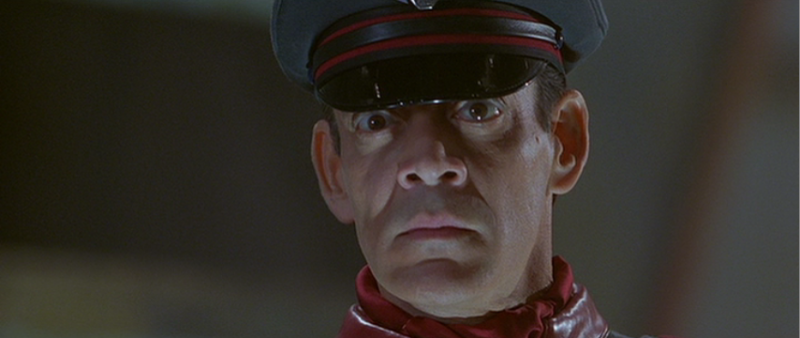
An awkward yet highly entertaining farce about the paradoxes of globalization and corporate fascism, wrapped in the superficial trappings of an adventure movie based on a martial arts video-game.  Raul Julia leaves this world with a bang, having the time of his life as General M. Bison, while Van Damme struggles with language (nevermind an American accent).


Wall Street: Money Never Sleeps (Oliver Stone, 2010) [letterboxd capsule]
Hey Oliver Stone: put down that metaphor before you hurt somebody.  Captivating at first before collapsing under its own weight.

Friday, July 5, 2013

1996 Cii Movie Awards (Take 2)

This list (Take 2) was compiled July 5, 2013.  Take 1 is available here.
                       For the criteria of the Cii Movie Awards, click here.


Top 10 Films of 1996
1. Lone Star (John Sayles)
2. A Moment of Innocence (Mohsen Makhmalbaf)
3. Mission: Impossible (Brian De Palma)
4. Secrets & Lies (Mike Leigh)
5. Drifting Clouds (Aki Kaurismäki)
6. The People vs. Larry Flynt (Milos Forman)
7. Fargo (Joel Coen)
8. Get on the Bus (Spike Lee)
9. Six O'Clock News (Ross McElwee)
10. American Buffalo (Michael Corrente)
Honorable Mentions: Irma Vep (Olivier Assayas), Kansas City (Robert Altman), Mother (Albert Brooks), Jerry Maguire (Cameron Crowe), Scream (Wes Craven), Stealing Beauty (Bernardo Bertolucci), Waiting for Guffman (Christopher Guest), The Rock (Michael Bay), Flirting with Disaster (David O. Russell), La Promesse (Luc & Jean-Pierre Dardenne)

Thieves Like Us (1974)

Thieves Like Us (Robert Altman, 1974)
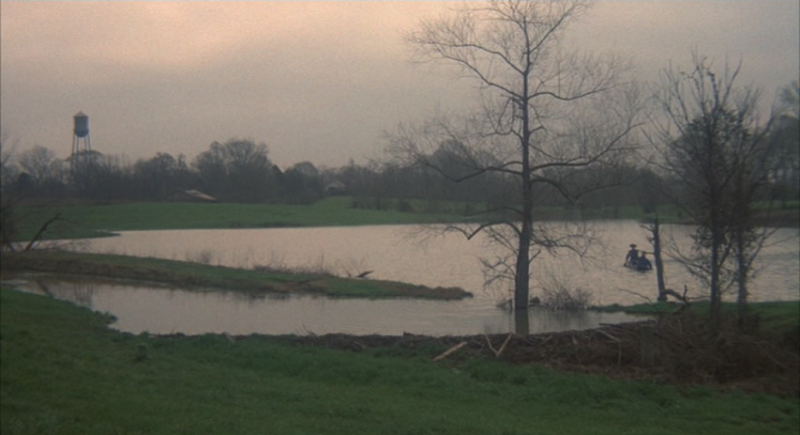
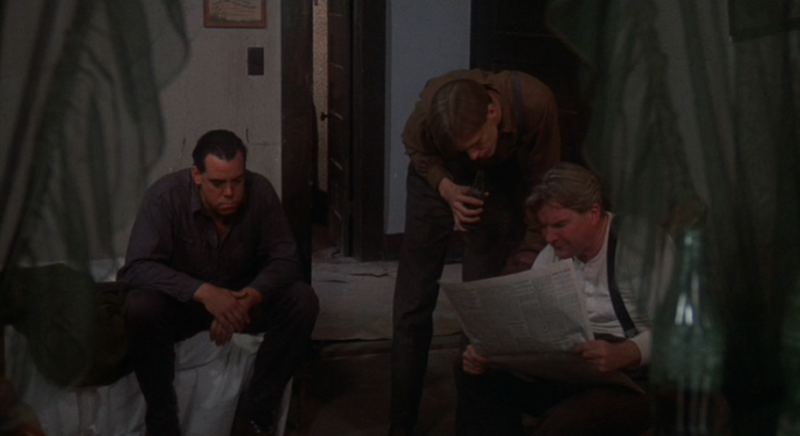
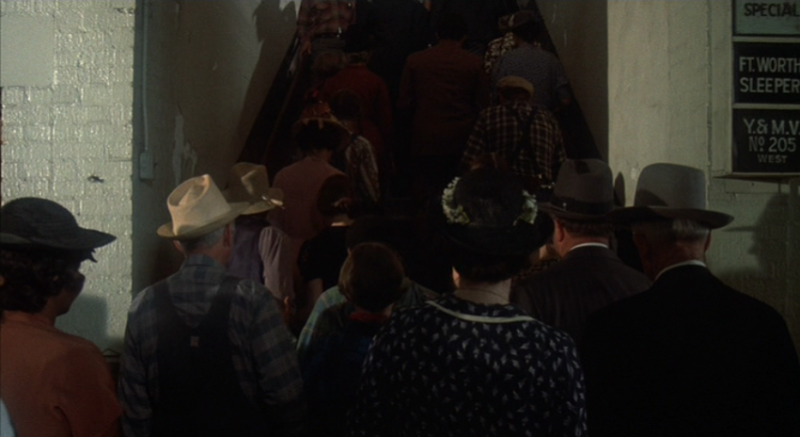
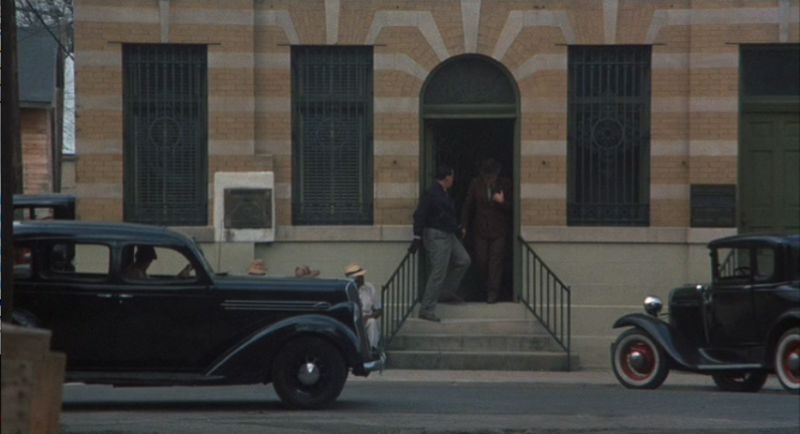
It seems like every problem I had with Dillinger (John Milius, 1973) is effortlessly overcome in Thieves Like Us, even though they are very different films with different intentions.  The bank robbers in Altman’s film are not famous but they do gain recognition that eventually hinders their ability to operate.  The seeds of envy will be sown as Elmo begins to be frustrated with recognition the young Bowie receives in the papers.  They see how myths are woven to add pizzazz and fear for readers but they aren't intelligent enough to understand it.  It just confuses them.  When the paper nicknames him Elmo "Tommy Gun" Mobley, Elmo confesses: "I only had a machine gun once in my life.  I didn't even get to fire it.  I just...held it."  
T-Dub reads what the paper says about their jailbreak.  "Not a whole lot about us, is there?"  But the myths are there to justify their eventual violent downfall.
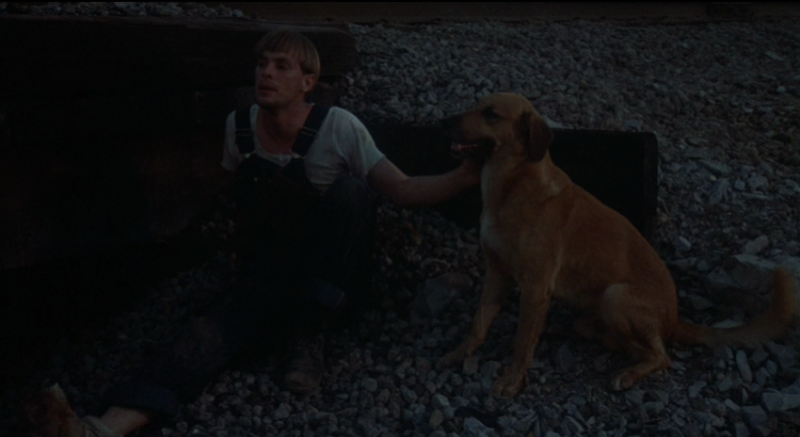
There are moments of such strange pathos and naturalism, as when a nervous Bowie talks to a stray dog to try and calm himself down.
There is a workmanlike notion these characters have about being bank robbers (“This will be my 35th bank…”), a sense of pride in a job well-done, a sense of relief in having something to fill their time.  Altman never treats their bank robbery as anything exceptional.  He only goes inside the bank with them once toward the end.  Likewise, no one talks about the Depression, but poverty is felt in little moments like the insistent mother making sure her kids eat all the food from their plates or the relish with which Lula shows off the outfit T-Dub bought her in New Orleans.  Or take the subtle changes in the robbers' clothing over the course of the film, going from recent escapees to established robbers with reputations and money.  They have to keep out of plain sight but they find their own personal flourishes with their wardrobe.  It isn't ostentatious, but it is real.

The radio is omnipresent, adding a thick atmosphere where fantasy and reality are strangely on an equal plane, where the pursuit of the robbers seems nearly as detached as the adventures of The Shadow. It also works as a unifying device similar to the loudspeakers in M*A*S*H.  (The radio becomes a winking commentary in Bowie and Keechie’s love scene.)  There is pathos and humor in Altman’s human universe, and those two are often inter-woven.  I love the scene where Bowie misses his rendezvous because he couldn’t tell if the pickup at the crossroads was flashing his lights (as planned) or if they were simply shorting out. It is the sort of plain, uneventful human misunderstanding that most movies simply don't have the time for.  
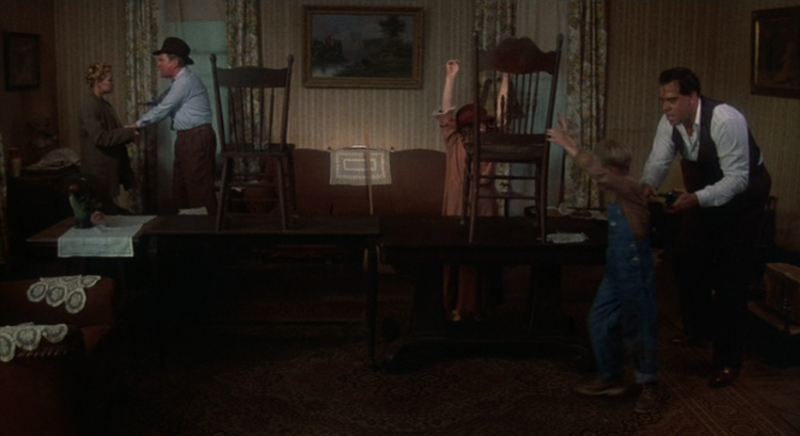
Before we ever see them rob the bank in Yazoo City, we see them set up an enactment to practice what they will do.  Is this truly for their benefit or for the strange sense of joy they get by playacting?  The children are game but Lula fights T-Dub the whole time.  Elmo becomes frighteningly immersed.
T-Dub relishes the moment.  Bowie is more passive.  But, rather than make him innocent, Altman has made him the most naturally gifted bank robber of the group.  Even Bowie himself can't think of anything he could do as well if he were to quit.
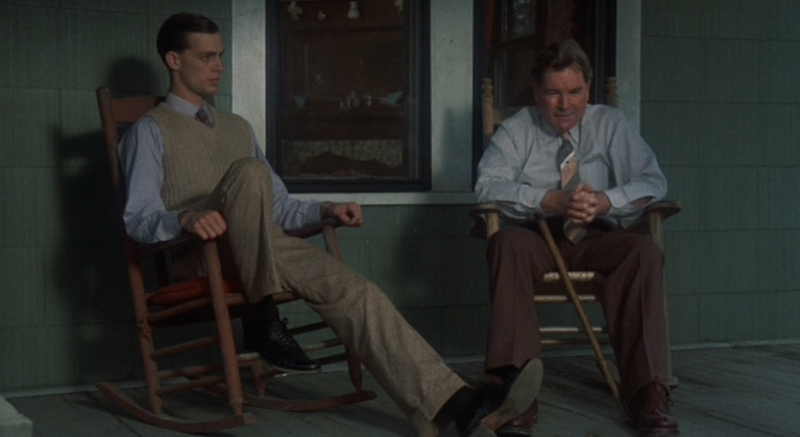
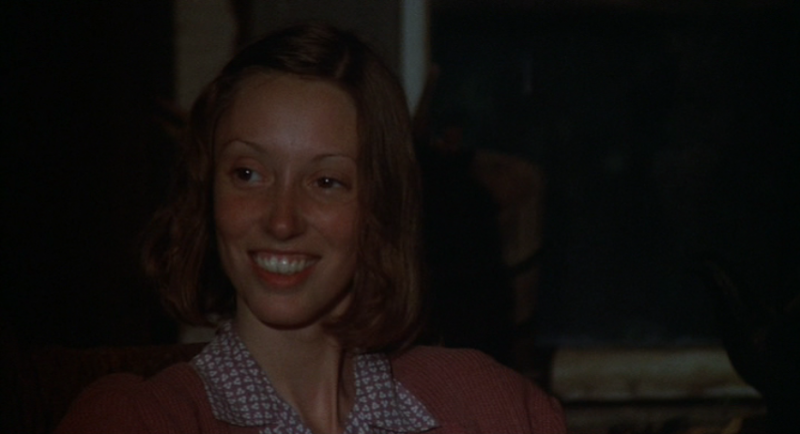
Shelley Duvall was always best in Altman's films.  Somehow he knew best how to use her unique physicality and off-kilter vocal delivery, her natural quirk and charm.  She fills the roll of Keechie with such naïveté and longing, but a determined acceptance of her lot in life that makes her far from passive.  It is easy to see why Bowie falls for her.  There is a sweet and unassuming nature to her that Duvall plays perfectly.  The early scene with the two of them flirting on the porch, remembering growing up is so honest and revealing as they try and hide behind their stories.  John Schuck, Bert Remsen and Keith Carradine are all great too with their naturalistic rapport.  Three people who could only have met in prison and thereby have a strange union that even they don't completely understand.  "They've never seen three like us," T-Dub exclaims.  But does he really believe that or just tell himself that to add dignity and uniqueness to their otherwise working class existence?

Altman perfectly utilizes Duvall's charm and natural casualness to connect us with her character and make her and Bowie's relationship the vital one of the film, differing strongly from the cordial gentleman's agreement of the three robbers.
The last shot of Thieves Like Us highlights the ordinariness of the characters we have just witnessed and its broader connection to the American south.  Keechie has determined to leave, moving to Dallas to have her baby.  Amazingly, despite her romanticism, she harbors no sympathy for her now dead husband.  "He crossed me up once too often, lying.  He doesn't deserve to have no baby named after him."
Then there is that strange phrase that pops up from time to time: "people like us" or "thieves like us."  It sets the robbers, in their minds, in a category by themselves, a group with a special purpose, personality and function that can only be properly understood by other people like them.  Altman lets them talk that way, but spends his whole movie presenting them as sad and a bit lost.  It's hard not to see this also as a fairly apt comment on the American South.  For Altman, what makes them extraordinary is in just how ordinary they are.  


Thursday, July 4, 2013

The Big Mess (1971)

The Big Mess (Alexander Kluge, 1971)
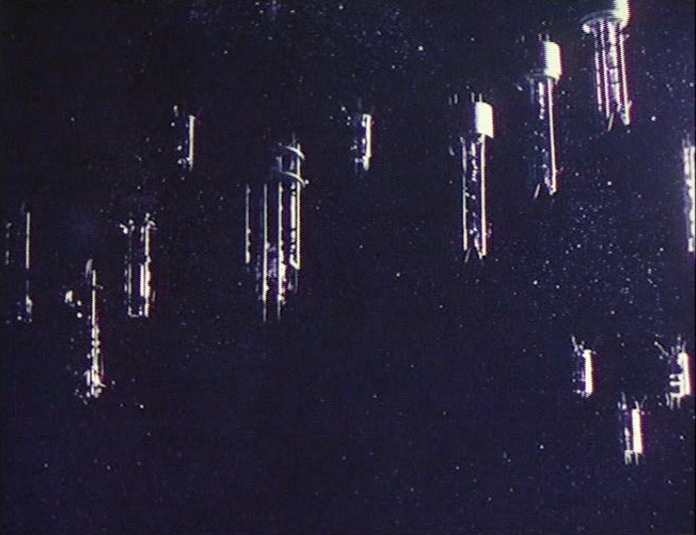
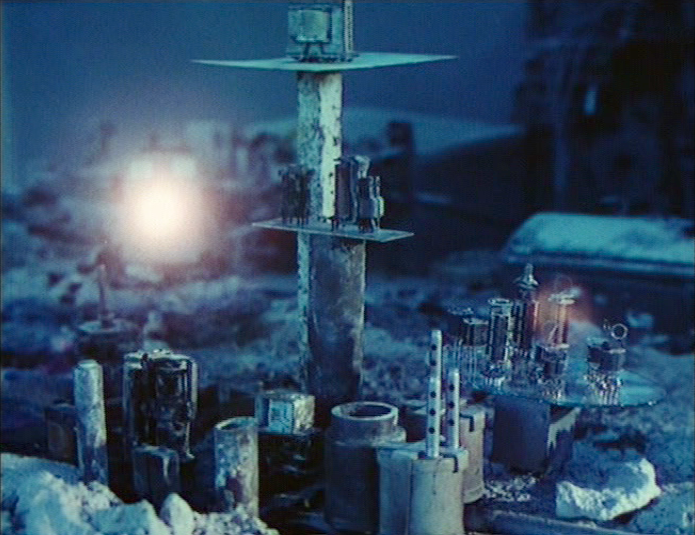
An aptly-named, hyper-collage, hyper-conceptual satire on capitalistic expansion, Kluge’s film feels like a strange d.a. levy poem about space travel written on a wall in a gas station bathroom.  One’s ability to enjoy this film is directly related to one’s ability/willingness to follow the conceptual tangents Kluge is weaving throughout.  Particularly of note are the themes of industrial monopoly and industrial scrap.  Considering that the special effects in the movie are basically appropriated pieces of trash, Kluge is painting the great cosmic expansion as a pursuit where the largest companies are making insanely massive, state-of-the-art spaceships that are simply floating scrap ready to be bought and refurbished into new floating pieces of scrap not long after being launched.  None of it seems to matter to the companies so long as they maintain control.  

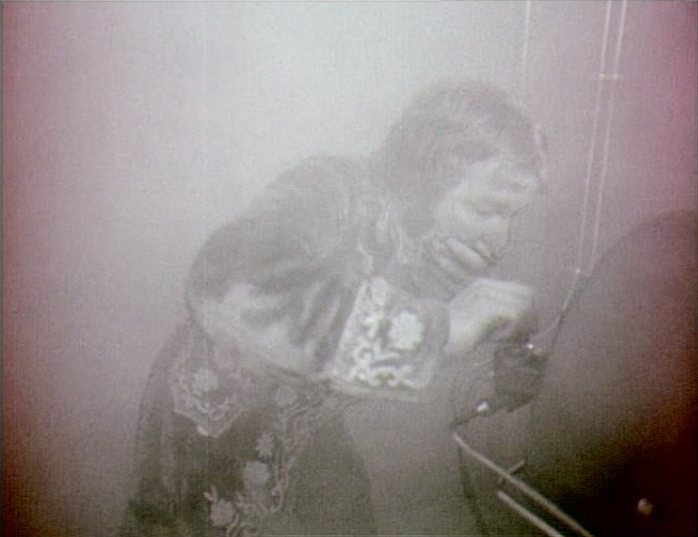
Many of Kluge's effects have been cheaply rendered, though not without considerable time, effort and imagination.  But his appropriated trash also conceptually serves his thematic interests.
The two accumulators go through their budget.  Even though they act as the system acts they do not have the system's permission to act that way and thereby are a threat to the system. 
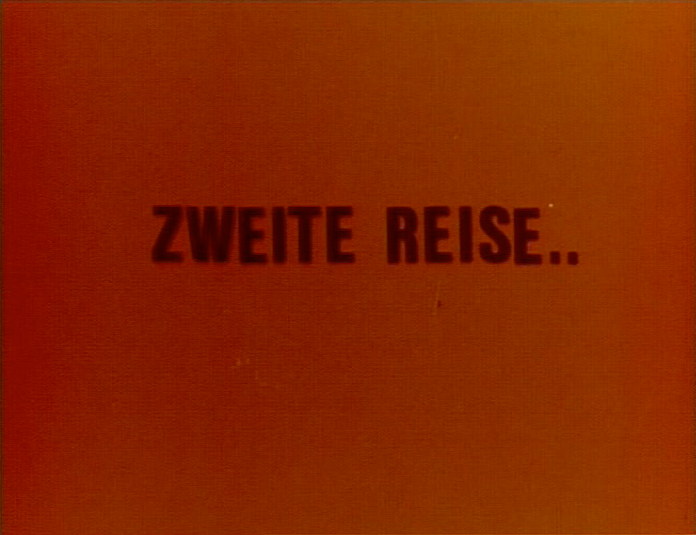
"Second Voyage.."  Kluge utilizes a slew of title card to give narration, some of it narrative, some of it atmospheric (such as some definitions from a Galactic Textbook).  All of it serves his style of collage.  There is no consistency in the color, layout or typeface used between cards, adding the the disorienting and chaotic affect of a disorienting and chaotic future world.

There is a bullying of the private accumulators, who basically do the same thing the large companies do but without their permission (and since the companies own everything, the accumulators are de facto thieves).  Despite the variety of faces that make an appearance in the movie, it is the Suez Canal Company that is the main throughline.  As a viewing experience, it is heavily fractured, a bombarding of words and ideas loosely linked to more traditional narrative images.  It is hard to see the connections sometimes but I think it is the force and speed with which it shifts between tones and storylines that is part of Kluge’s purpose.  Technological advancement is seen as a hodge-podge of old, antiquated notions repurposed and new ideas barely cultivated all quickly cobbled together to serve the capitalistic interests of the ones controlling the galaxy.  

The irony for Kluge is that his movie is like the accumulators in the film: charming and imaginative but ultimately doomed because the galaxy is already owned by the big boys.


Wednesday, July 3, 2013

Judging Oscar: 1975

For previous Oscar assessments, check out 1973, 1980 and 1996.


BEST PICTURE

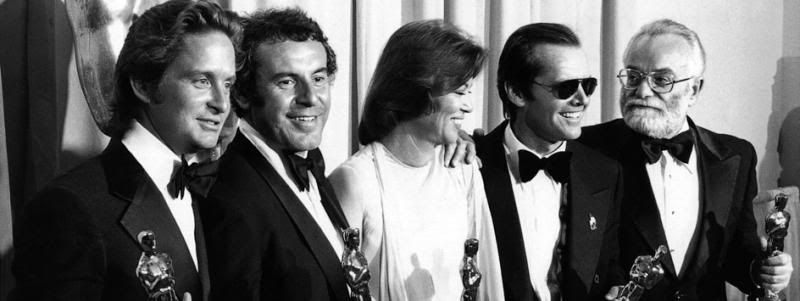
WINNER: One Flew Over the Cuckoo’s Nest (Milos Forman, 1975)
One of the quintessential anti-establishment pictures, One Flew Over the Cuckoo’s Nest is able to capture the frustration, rage and bewilderment of being trapped in a system that seems to be a benefit only to realize that walls and bars are not so bad: it is the people who smile calmly at you while taking everything from you that should terrify us most.  It is wonderfully written and performed while Haskell Wexler’s cinematography tries its hardest to avoid shadows inside the hospital, lighting everything as evenly as possible until we get to those night scenes.  Avoiding the pat functionality of every character “representing something,” Forman is able to carefully chart the growing relationships within the group of patients and how their awareness of the world and each other is slowly affecting them.  Forman also maintains a consistent point-of-view, never leaving the patients to present the world outside the hospital or in the doctor’s conferences.  This not only endears us to the patients (and McMurphy in particular), but also adds to our growing frustration as we see the institution seemingly create some of the diseases it offers to cure.


Thursday, June 20, 2013

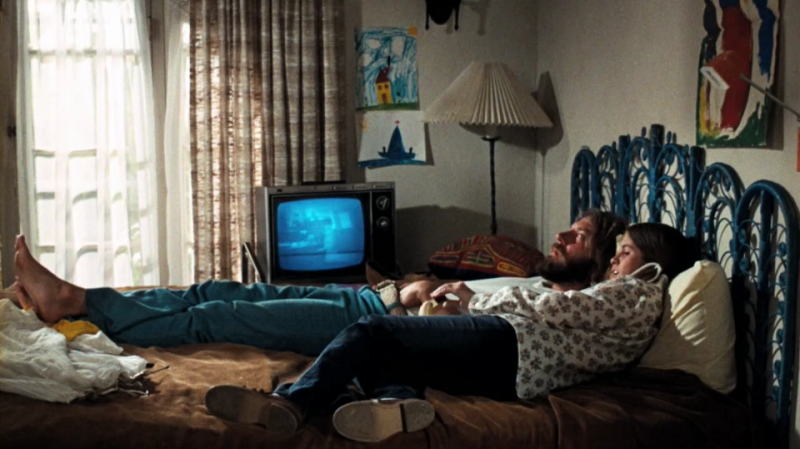
Alex in Wonderland (1970) and the New Hollywood Paradox

Alex in Wonderland (Paul Mazursky, 1970)
Coming to audiences near the beginning of the New Hollywood era (1967-1979), Alex in Wonderland is both an appreciation of the artistic freedom afforded to directors by producers/studios during that time and a unique representation of the paradoxes and paralysis facing the New Hollywood filmmaker in light of that freedom.  It is bold and audacious and brilliant, written and directed by Paul Mazursky, one of the forgotten dual talents of that era.

Wednesday, June 19, 2013

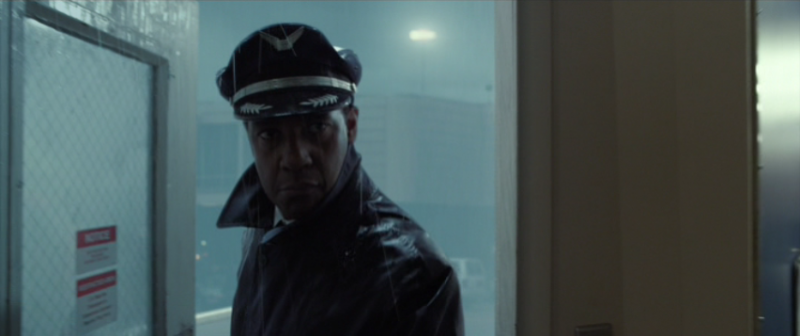
The Refusal of Culpability in 'Flight' (2012)

Flight (Robert Zemeckis, 2012)
No one likes to take responsibility for the bad things that happen.  It is easiest to blame someone else.  We accept accolades for success but always shift the blame for the failures.  If that is true of individuals it is just as true of the institutions we build.  Families, governments, corporations, schools, even churches.  It is the root of social diseases ranging from extraneous litigation to alcoholism.  In that way, Flight is pertinent and hard-hitting.  Not just because it deals with alcohol addiction, but because it deals with the root of addiction: the refusal of culpability.  And, even though it paints a far-reaching societal portrait, it is also bold enough to admit that there is a way beyond it.  

Tuesday, June 18, 2013

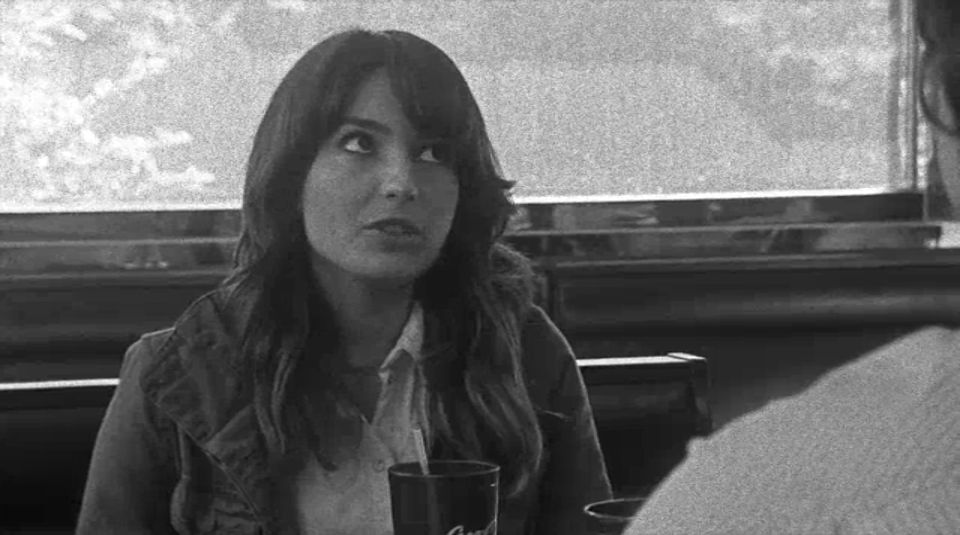
The Color Wheel (2011)

The Color Wheel (Alex Ross Perry, 2011)
There is a moment about a third of the way into The Color Wheel where Colin's thoughts toward his sister are summarized in the statement, "You've always been a hot commodity in the world of perverts."  Not that his insults are one-sided, as the entire relationship of this brother and sister is based on their annoyance with one-another and the ability to place uniquely searing insults at the feet of the other.  Colin lambasts J.R. mostly for her failed dreams of being a news anchor and her taste in men (most recently illustrated in her affair with a broadcasting professor); J.R. lambasts Colin for his apathy and lack of imagination.  But, as the story unfolds, it turns out that J.R. and Colin -- as cruel as they are to one another -- are only slightly less cruel than the world of their fairly privileged bubble.

Friday, June 14, 2013

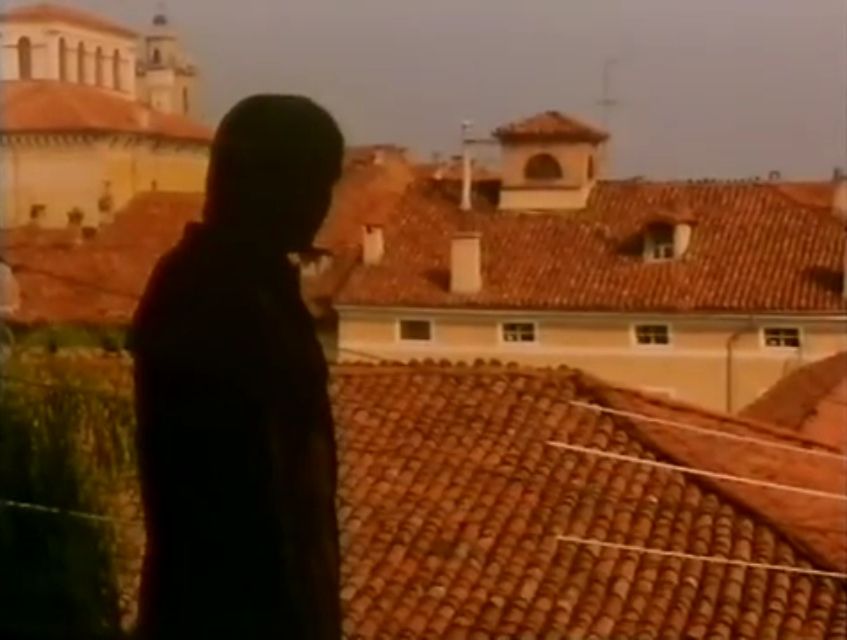
The Spider's Stratagem (1970)

The Spider's Stratagem (Bernardo Bertolucci, 1970)
Movement through time and space.
Tiny movements, barely discernible.  
The decisions made in a moment.  The people who made them.  The reasons don't matter.

The son of a hero comes home.  He mirrors his father.  
The same name, the same look.
Athos Magnani.
There is his old mistress.
There is the memorial.  
There are his old friends.
There are the memories.
There are the lies. 

Where does one end and the other being?
The son walks in all the same corridors, fields and roads.
He may be looking for closure.  Closure is an abstraction.
Railways eventually covered over by grass.  Single, sharp parallel lines eventually broken by the convergence of thousand askew lines, all for their own purposes.

Bertolucci builds slowly, allowing these movements to linger.
Clarity is not his end goal. 
Literary allusions.
Fascism and anti-fascism (of course). 
Reality and illusion.
Sometimes, the invisible men.

There is the oppressive realization that truth is good for some but the masses need the illusion, they crave it.  The symbolic pointing to something great outside themselves.
The corporate imagination.

film journal entry: 06.14.2013

Thursday, June 13, 2013

The Death of Romanticism in 'Les Bonnes Femmes' (1960)

Les Bonnes Femmes (Claude Chabrol, 1960)
Swinging the pendulum deftly between various moods -- documentary-like observation, gender comedy, absurd comedy, tragedy and finally, quiet transcendence -- Chabrol's film shows a careful narrative structure and a formal beauty that really gripped me.  This is my first Chabrol film and I come to it already familiar, though not overly enamored, with the other early touchstones of the French New Wave: The 400 Blows (Francois Truffaut, 1959) and Breathless (Jean-Luc Godard, 1960).  This is a really beautiful and unique film that is made so rich mostly because Chabrol's keen interest in human interaction, spoken and unspoken.

A delicate portrait of city women and a searing subversion of romanticism, Chabrol follows four Parisian girls in their early 20's over the course of a handful of days and nights, though it is the stories of Jane and Jacqueline that get the lion's share of the focus.  Both of these women are intensely romantic, though in opposite ways.  Jane embraces the romanticism of choice, freedom, being unencumbered, being her own woman; Jacqueline embraces the more conventional romanticism of being swept off her feet by a man who loves her deeply.  Over the course of the film, their romantic notions will be thwarted as the men who drift through their lives upend their dreams of freedom and love.

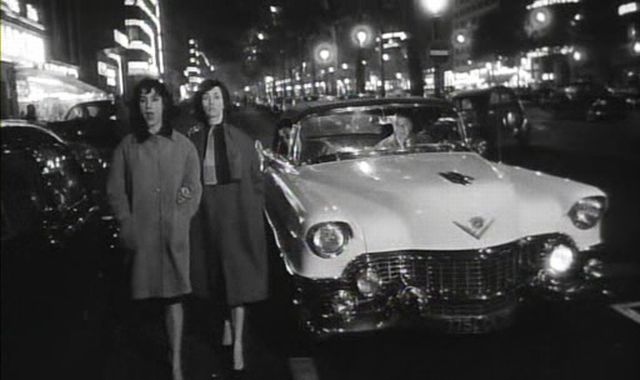
Jacqueline and Jane are walking home one evening when they are suddenly stalked very persistently by the ostentatiously lighthearted duo of Marcel and Albert.  They are nothing more than guys looking for a good time and though they seem charming and entertaining early on, over the course of the evening they become increasingly callous and demanding of Jane, who is far more accommodating than Jacqueline.  Eventually, she is in their apartment and expected to be sexually involved with both men.  Chabrol, though ultimately sympathetic to the women who are at the mercy of men in power, still sees a paradoxical conflict where Jane's own freedom of choice has brought her to this compromised state.  When Jane returns to her apartment early the next morning, we get the unfortunate feeling that she had to involuntarily give into at least some of the men's demands.  She is not in the mood to discuss with her roommate anything that happened. 

One of the key scenes is the night at the swimming pool, a scene where every major character (apart from Mr. Balin) is present.  It starts as a lighthearted jaunt that slowly turns into a aggressive assault of masculine dominance in its good and bad forms.  Marcel and Albert happen to be at the pool too, where Jane, Jacqueline and the rest are enjoying their evening.  The two men quickly start teasing Jane into introducing them to their party and find that she has become significantly less accommodating since the last time she was with them.  Quickly, things deviate into a prankish show of disapproval, where Marcel and Albert throw all the others into the pool and start dunking them all under water.  Jane and Jacqueline obviously get the brunt of the dunking in what has quickly shifted from good-natured prank into psychological torture.  Chabrol notes this shift in tone by shifting his camera angle, showing us underwater shots of Jacqueline being pushed under, matched with muffled underwater audio. Finally, we get our relief in the form of Andre, who dives in from the high dive to swim over and rescue Jacqueline from her peril.  The two men, now emasculated and embarrassed, back off as Andre becomes the hero of the scene and the wish fulfillment of Jacqueline, who has noticed him stalking her recently.  

At this point, it seems Chabrol has brought us full-circle into a traditional (though slightly unconventional) romantic film, as Andre and Jacqueline are quickly away into the countryside, sharing a meal together where Andre proves himself to be a jokester himself, full of little tricks that amuse the enamored girl.  He takes them on a walk in the woods that slowly becomes more and more uncomfortable, until finally we are given an ambiguous moment of consummation, as the two lay together in an isolated area as the birds around them call out rhythmically.  Chabrol finally lets us in on what is happening (having alluded to it so obviously earlier with Andre's own inquisition -- though as a hopeful optimistic, I disregarded it) as we see that Andre is strangling Jacqueline, whose squirms were not the happy writhing of passion but the desperate movements of anguish.  

Andre leaves the scene quite hurriedly and we are never afforded an answer to his mystery.  Why was he following her?  Why did he want to kill her?  Did he know anything about her at all?  Instead, Chabrol takes us into a dance hall where a young woman is being asked to dance by a young man.  We cannot see the man's face because we are left with the gaze of the young woman, who literally locks eyes with us and is intercut with the slowly changing angle of the glistening mirror ball above them.  The metaphorical fractured beauty of the ball is now a frustrated thing, not giving us narrative or sentimental satisfaction, but a vignetted series of dots that clutter the atmosphere and highlight how bright the light could be if it were just focused.  The romanticism that seemed so certain only ten minutes prior has now been unfairly shattered, and we are left with a moment to ponder the frustrating reversal as we experienced the fulfillment of our greatest fears rather than our greatest dreams.  It is a strange moment of transcendence.