Showing posts with label 1973. Show all posts

Monday, April 22, 2013

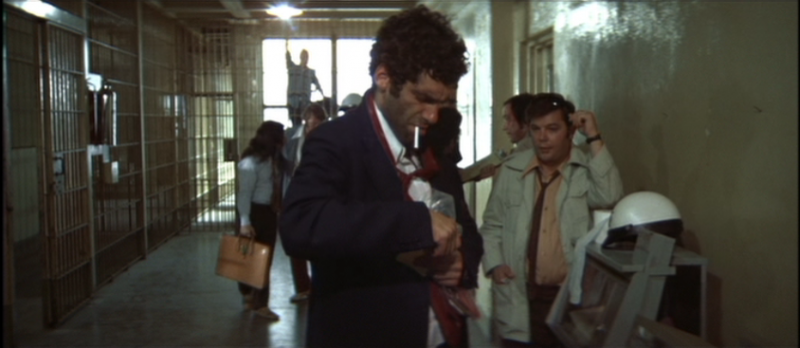
The Long Goodbye (1973)

The Long Goodbye (Robert Altman, 1973)
Few people can do genre revisions like Robert Altman.  
Probably because Altman doesn't really care either way; he's just making a film.

Underneath the palm trees and drug-induced hangover of the West Coast in the early 70's is a rotting corpse.  Marlow just happens to still live there, like a fish permanently out of water that must now learn how to breathe in the air.  He will, Altman suggests, by the end.

Mysteries are everywhere but the most pressing ones involve people and guns and money. 
Lots of people ask questions.  
Do they get the answers?  I can't remember.

Marlow's cat.  Marlow's neighbors.  
Marlow's apartment building.  Celebrity impersonation guard.
Altman includes these things and they become the fabric that is both essential and non-essential.  
Narratively, they are not very important.  Cinematically, they are what must be.
Altman has a way with those things.  

By the end, we have witnessed the end of an era and the beginning of another.
A bit like McCabe & Mrs. Miller in that way, but slightly hopeful about the possibility of adaptation.  Marlow has changed by the end.  
He is simply tired of it all.  
Tired of being used.  Tired of allegations.
Tired of plots and subplots.
Tired of lies.  Tired of distrust.
It may not feel radical, but it is.

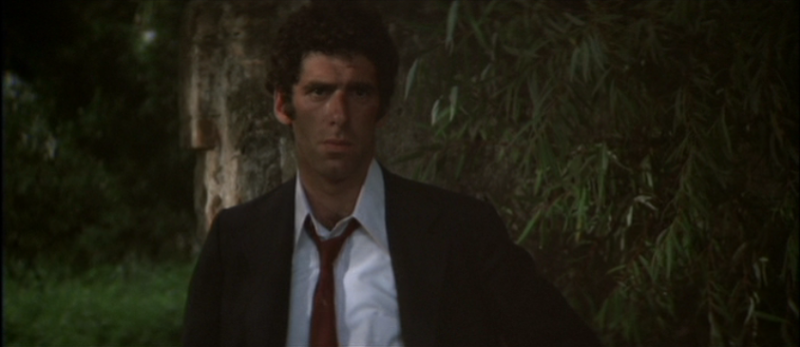
And then there is that stare.  The look on Marlow's face as he listens to Terry explain it all.
No epiphany; no a-ha moment.  
Only the cold heart of man staring back at the walking dead.

film journal entry: 04.22.2013

Friday, April 19, 2013

1973 Cii Movie Awards

Top 10 Films of 1973
1.  The Long Goodbye (Robert Altman)
2.  Paper Moon (Peter Bogdanovich)
3.  Electra Glide in Blue (William James Guercio)
4.  Badlands (Terrence Malick)
5.  Don't Look Now (Nicolas Roeg)
6.  The Sting (George Roy Hill)
7.  American Graffiti (George Lucas)
8.  The Spirit of the Beehive (Victor Erice)
9.  Westworld (Michael Crichton)
10.  World on a Wire (Rainer Werner Fassbinder)
Honorable Mentions: Sleeper (Woody Allen), O Lucky Man! (Lindsay Anderson), Mean Streets (Martin Scorsese), Fantastic Planet (RenĂ© Laloux), Charlotte's Web (Charles A. Nicholas & Iwao Takamoto), The Last Detail (Hal Ashby)

Wednesday, April 17, 2013

Judging Oscar: 1973

I have watched or re-watched the films nominated for Best Picture and Best Director and then placed a value judgment on what I saw cinematically.  Last time I did 1980.  This is 1973. 


BEST PICTURE


WINNER: The Sting (dir. George Roy Hill)

Charm and entertainment value can go a long way, and why shouldn’t it?  This is a perfectly executed update and expansion of the Depression-era programmer that has as much fun with its scenery as it does with its plot.  And I won’t hold any of that against it.  Snappy dialogue, scenery-chewing performances, period costumes, a wonderfully evocative ragtime score.  David S. Ward's script is sharp and sparkling, perfectly structured and paced and kept that way by George Roy Hill. It is impossible for me to view this film objectively anyway, as it was the first “grown up movie” that my parents let me see (at around 13 or 14 I was determined to see any Oscar nominees I could from the 70’s through the 90’s).  I loved it then, even as it spun my head around in circles, and I love it now for Robert Shaw, for Paul Newman, for all the bit character actors like Durning and Gould.  I love it for the sets, for the feeling, for the nostalgia.  I love it for the plot mechanics.  I could sit down and watch it just about any time.  I don’t have to figure it out; I like going along for the ride.

Tuesday, April 9, 2013

American Graffiti (1973)

American Graffiti (George Lucas, 1973)
George Lucas---what happened to you?  Remember when you cared?  Remember when you effectively placed boomer nostalgia within a humanistic context that was both funny and interesting?  

It finds the angst, insecurity, distractions and hormones of high school and gives us great characters to follow as they amble through a night on the verge of summertime in Modesto.  
Paul La Mat.  Candy Clark.  Both are tops.
Harrison Ford is always cool, even when he's too old for high school, too old to be on the proving grounds with his souped up automobile.

Lucas doesn't end it with nostalgia, which takes it from good movie to great movie, with the epilogue description of what happened to the four main males after school, to the "now" (the now of 1973, I suppose).  
The eternal now.
Dead, lost, writer, insurance.  
There you have it: the American Dream.  
Leave your mark on the landscape.  Be remembered.  
Was that night important?  Was it essential in the course of things?  Only in its unimportance.  
Only in the way it isn't about epiphanies.  
As the future dawns behind the car at the end, it is the small choices that make up a life.  
We see that.  They lived it.  They lived through it.  
Are they any better?
Is this one more thing they will forget?  
Is this the embarrassment they think of when they remember their youth?

film journal entry: 04.05.2013