I watched these in chronological order and have written out a few remarks for all of them. Some are absolutely brilliant, some are run-of-the-mill but elevated briefly by a great gag or two, only a few are terribly bland and redundant. My particular recommendations will be highlighted in red.
[I will be covering his 1940's output soon but wanted to go ahead and post this overview to his 1950's work.]
See also: Tex Avery at Walter Lantz Productions (1954-1955)
Tex Avery at MGM, part 2 (1950-1957)
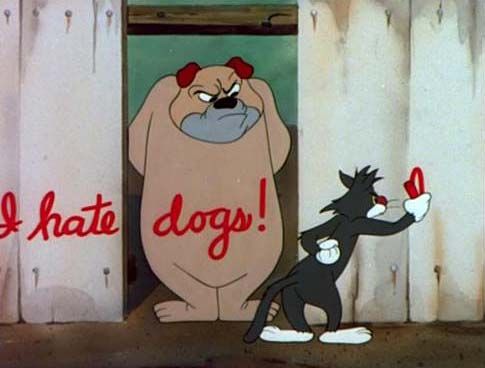
A cute premise but ultimately kind of forgettable Avery. In fact, after I watched several Avery’s for this I had literally forgotten everything about this one. I had to reference it again just to remind myself of the cleverish cat-throwing-his-voice-for-the-dog premise, which is basically Bad Luck Blackie with a special whistle. It would go on to be completely remade 7 years later in CinemaScope as Cat’s Meow.
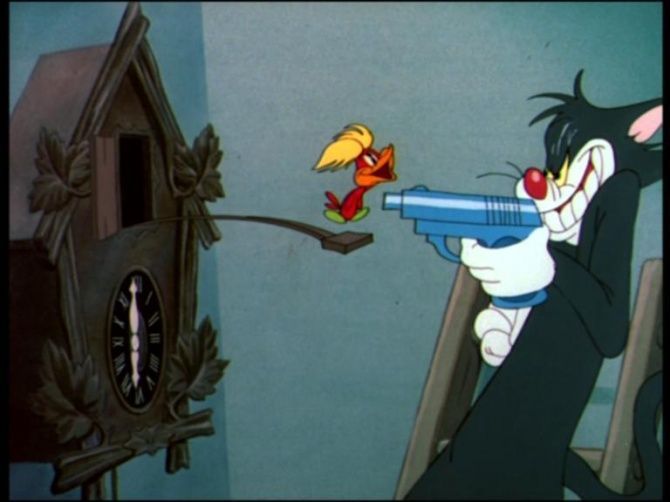
The Cuckoo Clock (1950)
I love the existential angst of the voice-over narration and then the ambiguous ending (did a cartoon finally bite it?). The little-guy-beats-up-big-guy theme was a favorite of Avery and would be seen a few times over (it’s basically what makes Droopy who he is), and even though it doesn’t offer me the same laughs-per-minute ratio as something like Magical Maestro, I am still really fond of this cartoon. The recurring motif of the injured appendage with that violin noise is gold.
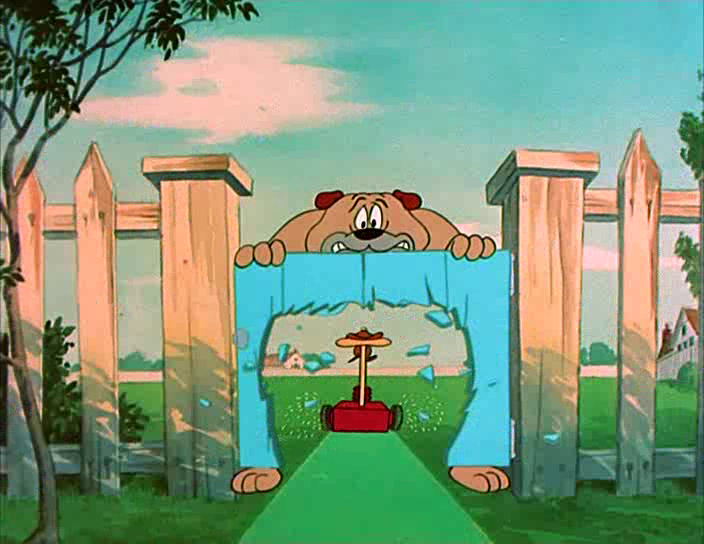
Garden Gopher (1950)
Run-of-the-mill Avery with Spike the dog battling a belligerent gopher. A few laughs but very minor Avery.
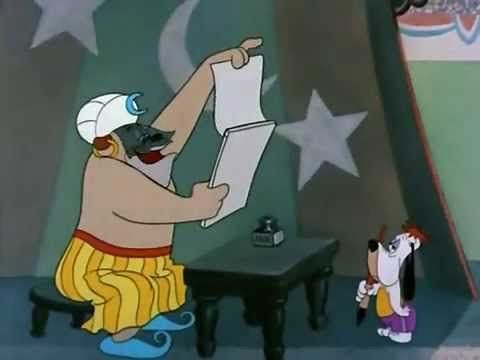
The Chump Champ (1950)
Spike vs. Droopy in feats of strength. A common scenario but I have some fondness for this one because I think the gags are strong and then the reversal at the end is a nice payoff. It also gives Droopy one of his best punchlines.
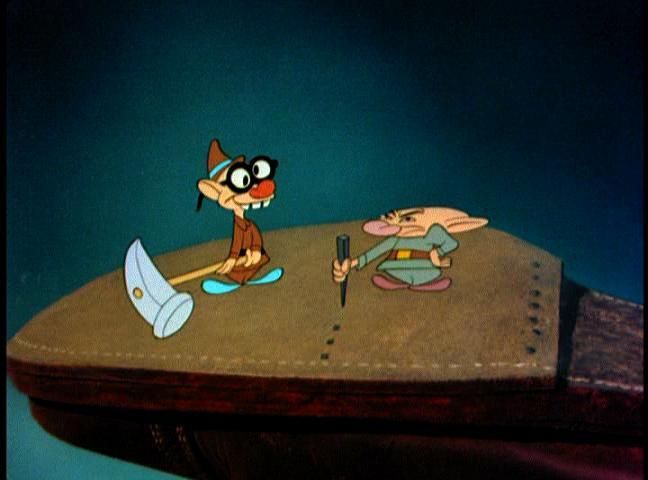
The Peachy Cobbler (1950)
Just a collection of tiny-elves-fixing-shoes gags. It is surprisingly endearing and the running joke with the roller skate speeding by and splashing shoe polish on the nice dress shoe is classic. This one grows on you because it is so good-natured, a nice turn for Avery.

Cock-a-Doodle Dog (1951)
A run-of-the-mill Avery that steps above that just a bit for the reversal at the end. Even though Avery might play on the same theme in multiple shorts, he wasn’t afraid to flip the script on the trope.
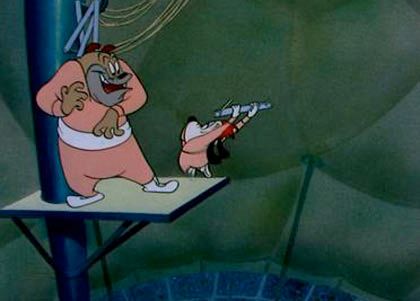
Daredevil Droopy (1951)
This is Chump Champ in a circus. I just realized the one I saw had some "offensive" gags cut out so it works even less effectively and feels very much like a collection of barely associated vignettes.
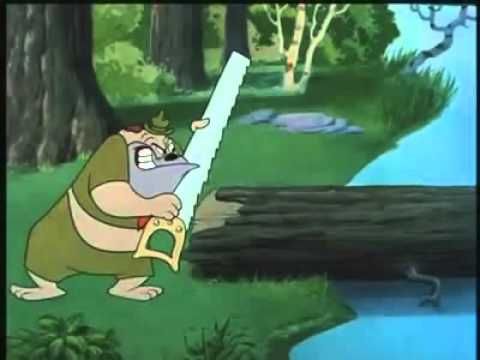
Droopy’s Good Deed (1951)
Chump Champ in a boy scout camp. The dadaist anti-climax was pretty good, though.
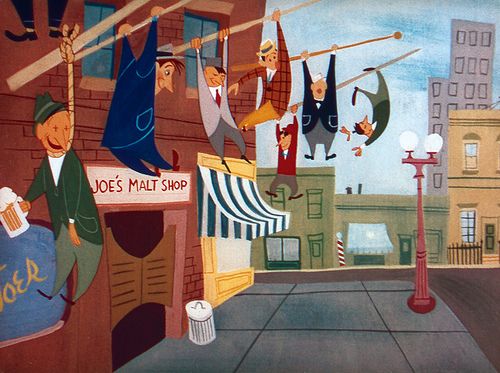
Symphony in Slang (1951)
This is one of those cartoons that was absolutely inevitable, and it is quite fitting that Avery went there (presumably first, I don’t know and frankly, don’t care). The premise is a guy who gets to heaven and starts recalling his life but the gatekeeper can’t understand the guy because he’s speaking in slang. The whole movie then becomes a brilliant deconstruction of American lingo and a literal expression of common phrases, beginning with the more overt slang (“I couldn’t cut the mustard”) and then subtly gets into turns of phrase that everyone pretty much says (“I drank a cocktail”, “I carried on”, etc.). It sounds like a premise that would work better on paper than on-screen, but Avery keeps things moving and ends up stringing enough phrases together where you have no idea what is coming next or how he can keep it up. He doesn’t let anything slip through unnoticed and is able to build up a great post-modern treatise on the insanity of language.
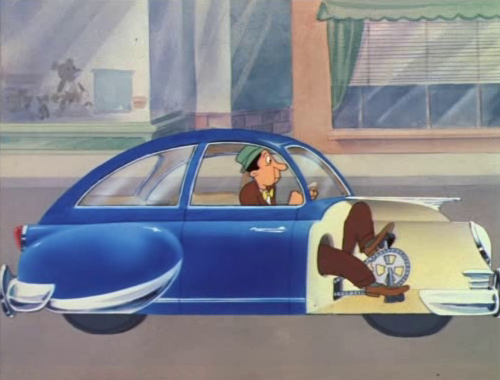
Car of Tomorrow (1951)
Avery did a few of these "...of Tomorrow" cartoons; this one is really just a collection of literal puns related to automobiles. Symphony in Slang did it all better and is much funnier. I found this one to be a bit of a clunker.
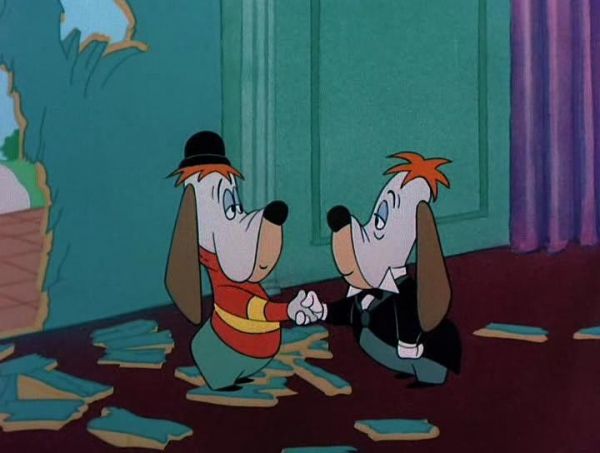
Droopy’s Double Trouble (1951)
A one-joke short with Droopy and his twin, Drippy, as butlers in charge of watching over a mansion. Droopy’s sensitive side comes through in this as he tries to show compassion to the down-on-his-luck Spike, not knowing that Drippy has been given the task of keeping strangers off the property. So, Drippy basically punishes Spike for his existence every time he sees him. Spike goes insane at the end. Features a great gag with the twin Droopys and two adjoining doorways.
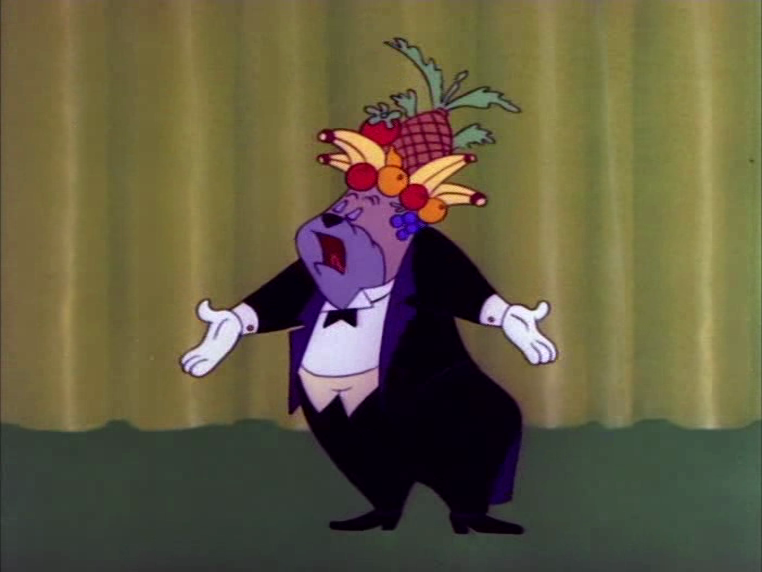
Magical Maestro (1952)
An absolute masterpiece and my favorite Tex Avery cartoon. Those who feign offense at old cartoons that make any play on ethnic or cultural signifiers conveniently forget that the whole premise of a cartoon like this is a dog singing opera. Equality is found under the spell of magic stereotyping. But beyond all that is the ratatat barrage of gags that build into a crescendo of chaos. The way the rabbits keep popping up; the Dadaist attack on class and culture (the opera patron happens to have an anvil in his box seat); the hair in the gate. It is all pitch-perfect. This one shreds me every time.
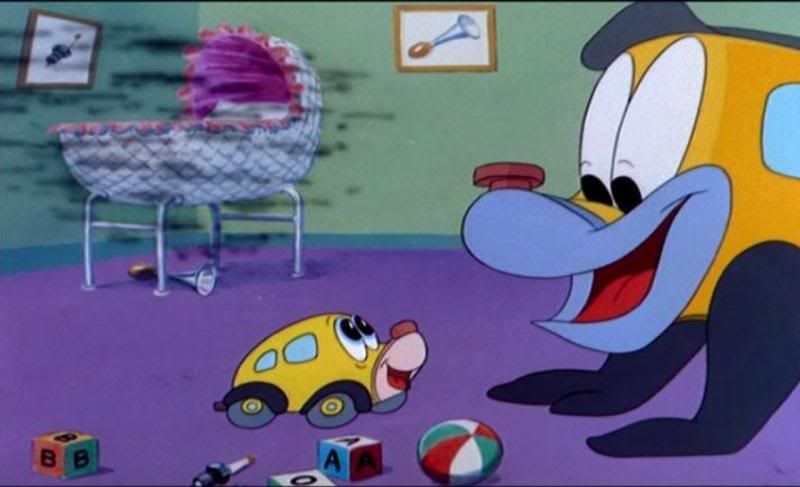
One Cab’s Family (1952)
There are plenty of clever gags in this one as it relates to the anthropomorphism of the automobile. I’ll take this over Pixar’s Cars any day of the week, both as entertainment and as social commentary. And it’s only 6 minutes long. Not top tier Avery but still very enjoyable.
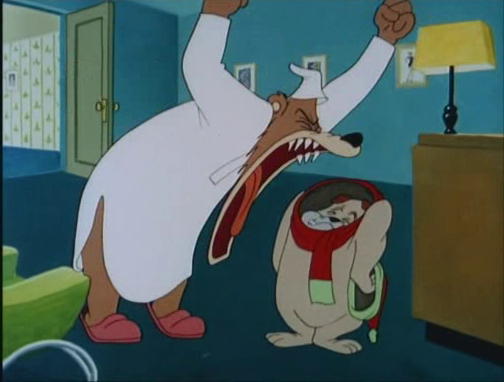
Rock-a-Bye Bear (1952)
One of the Spike as hero cartoons where some unnamed dog forces Spike to volunteer for a job that gets him out of the pound. The whole scenario is built around this other dog torturing Spike to get the hibernating bear (who seems so sensitive to noise) to wake up and beat Spike up/fire him. In true Avery fashion, each gag is a way to bring pain and force Spike to shout out. The cartoon is funny by itself but it sort of becomes obsolete after watching the superior Deputy Droopy, which borrows the same basic structure (and even a couple of gags) but doubles the zaniness and hilarity. But, to its credit, Rock-a-Bye Bear does have a fantastic final reversal. Also, I love Spike jaunty snow-shoe walk up the driveway after he gets the job.
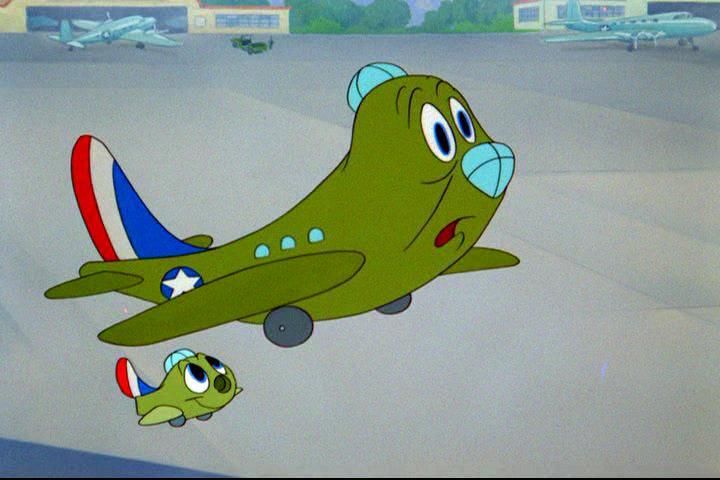
Little Johnny Jet (1953)
A little bit of a One Cab’s Family retread with airplanes instead of cars (hey Disney, there’s an original idea!), with the kid being a jet instead of a hotrod. Apart from some light humor at the anthropomorphic airplane setup, this really doesn’t feel like an Avery comedy until the airplane race.
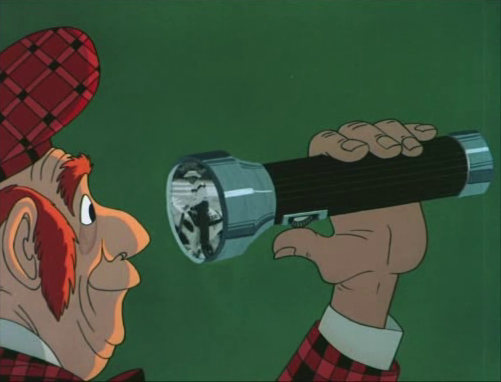
T.V. of Tomorrow (1953)
The only thing that keeps this from becoming a completely lifeless retread of Car of Tomorrow is Avery’s deep-seated annoyance at the proliferation of TV; this one has a much more cynical undertone than the other "...of Tomorrow" shorts. It still falls mostly flat for me, with the one exception being a fantastic joke with a character showing off the variety of channels (the same western TV show is playing on every channel) before going to a first run theater where the movie turns out to be the same western from TV. A great gag in a forgettable cartoon.
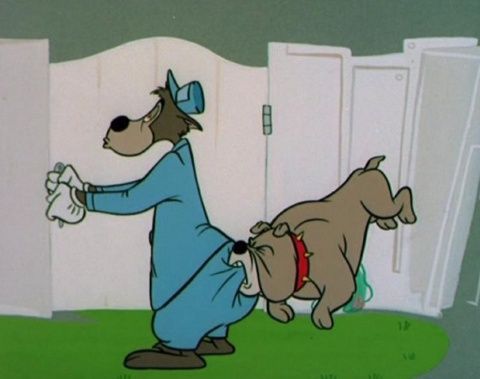
The Three Little Pups (1953)
More jokes on television as the 3 Little Pigs story gets revisited with Droopy housing the other dogs in his brick and steel home so they can watch TV. Run-of-the-mill but still pretty enjoyable.
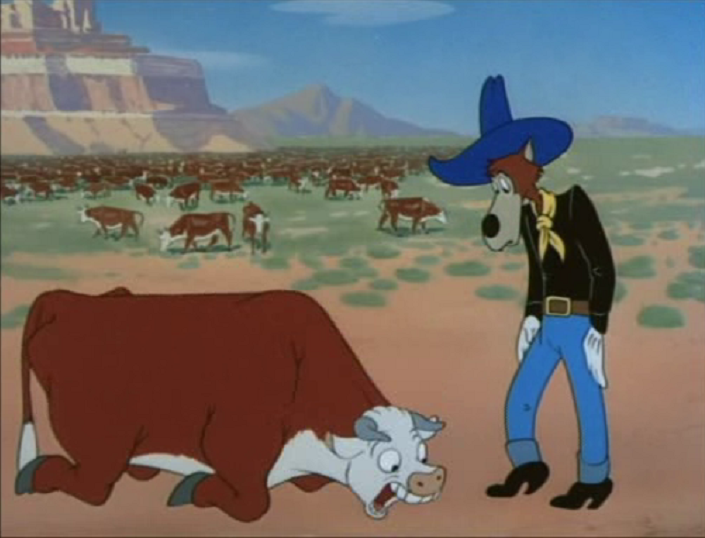
Drag-a-Long Droopy (1954)
Western-themed Droopy cartoon where Droopy is a sheep-herder and the wolf is a cow herder and they battle over the land. Several clever gags keep this one moving along rapidly. I especially like the shootout.
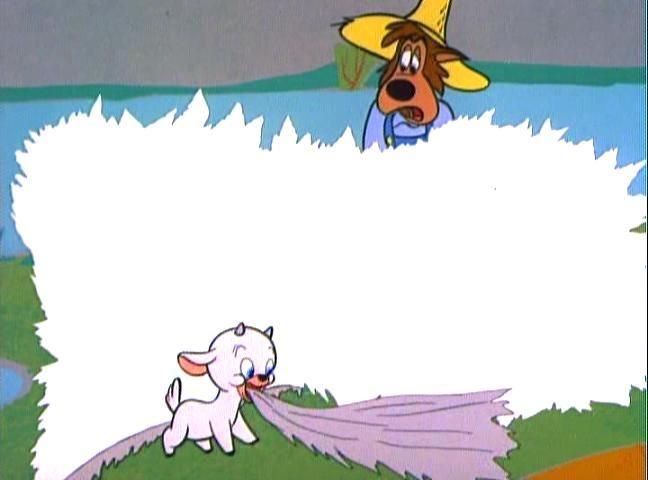
Billy Boy (1954)
Avery has some fun with the animal-who-eats-anything premise: in this one, a goat who just lawnmows across the landscape to the chagrin of a stuttering farmer. The funniest image is the goat being tied inexplicably to a kite; the funniest gag is the goat being set in front of a railroad track to eat his way to California.
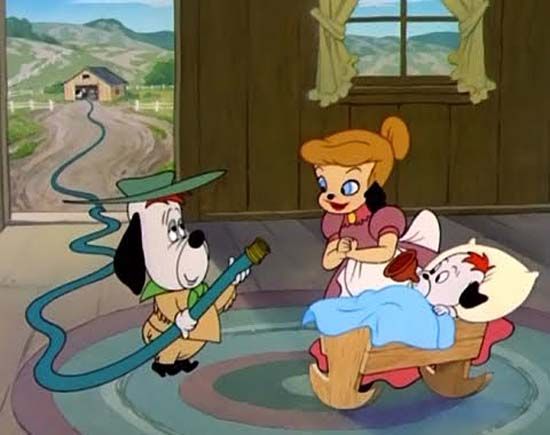
Homesteader Droopy (1954)
Another western-themed droopy that finds some pretty good laughs with an automatic homesteader kit and a mounted moose head. I enjoyed the anachronistic humor and the play on the western movie cliché “It’s the law of the west.” Also a great moment with the wagon circling itself and the Indians becoming merry-go-round riders.
The Farm of Tomorrow (1954)
A nice joke with the toaster-like incubator and a couple of good visual puns at the end can’t make up for a lifeless premise on its last legs. A total bore. Thankfully, this is the final of the “…of Tomorrow” cartoons.
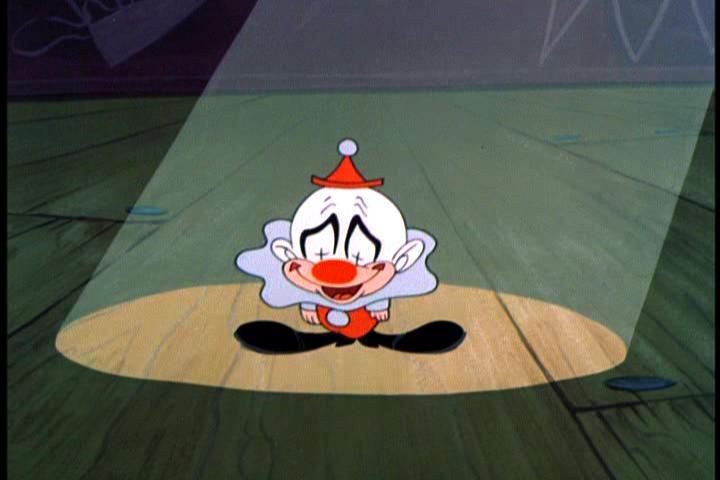
The Flea Circus (1954)
A flea circus falls apart after a dog walks in. It is unique in Avery’s collection for being more strictly narrative-driven than a gag vehicle, though the narrative is still pretty thin. It is a cute little cartoon that doesn’t give much beyond a couple of light chuckles, though its good-natured charm is enough to keep it from being a total bore.
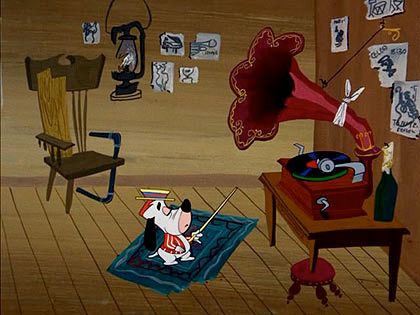
Dixieland Droopy (1954)
What begins as a fairly harmless and humorous story of a dog trying to play his Dixieland record while he pretends to conduct the band turns into a fascinating comment on musical stardom: Droopy gets all the credit while the real band, the fleas living on his rear, are unknown. It also features a hilarious gag with an unorthodox musical toupee. Not a great cartoon but a fun one with a nice conceptual catch at the end.
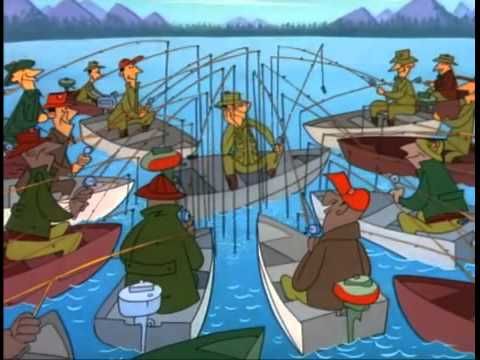
Field and Scream (1955)
Taking the same tired, vignetted structure of the “…of Tomorrow” shorts and making it only slightly more amusing, Field and Scream doesn’t improve upon the hunting jokes of Lucky Ducky or include any of its self-reflexive brilliance. There is a nice bit with an elephant gun, but it is mostly a misfire.
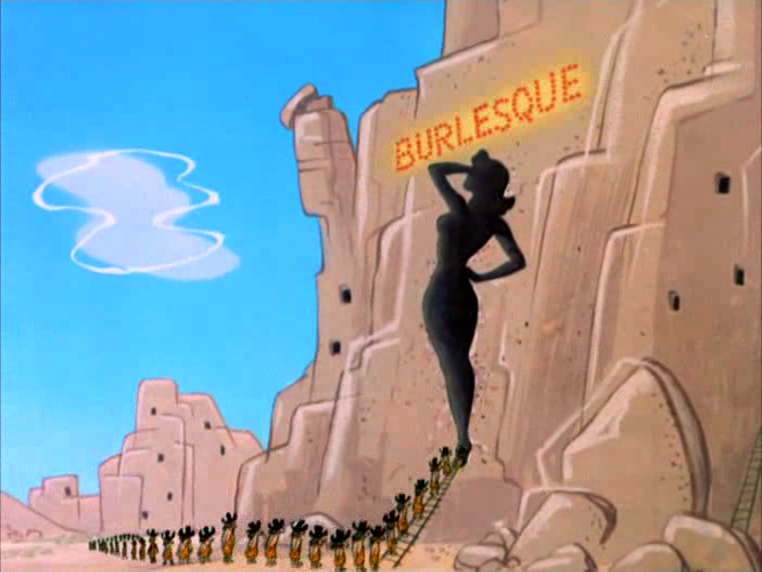
The First Bad Man (1955)
Avery dreams up what prehistoric Texas might have been like and gives us the story of the first outlaw, Dinosaur Dan. It is a decent premise that doesn’t get carried quite as far as it should.
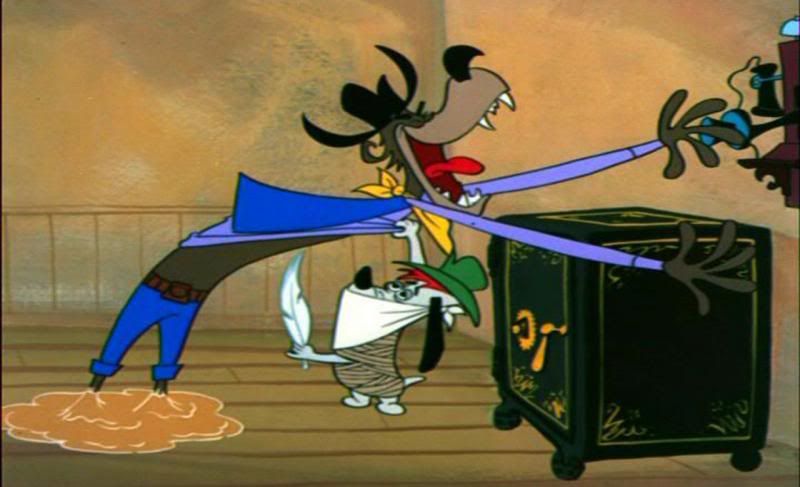
Deputy Droopy (1955, co-driected with Michael Lah)
Going back to his roots a little bit, Avery gives us another great cartoon in the “don’t wake the sleeping character” premise of Rock-a-Bye Bear. But, he also improves on that short by having two characters tortured by Droopy’s string of zany assaults. The two would-be robbers play off of each other as they argue and repeat their own mistakes and even switch heads at one point. The whole thing is comic chaos and the ending (which was easy to spot) becomes subverted by Avery’s refusal to end the joke until Droopy gets the final punchline.
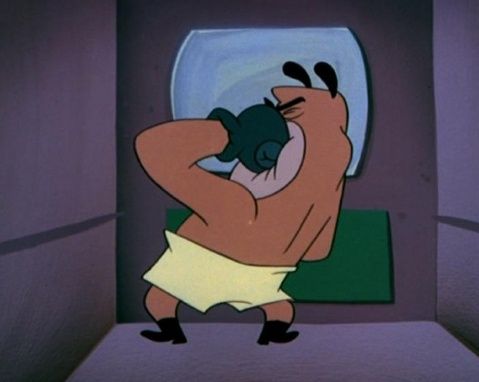
Cellbound (1955, co-directed with Michael Lah)
This was one of my favorites as a kid and it still works quite well. After spending twenty years digging his way out of prison one spoonful at a time, Spike accidentally takes refuge inside the TV the prison warden gets as an anniversary present to his wife. With his bag of costumes, Spike must act out all the programs the Warden tries to watch.
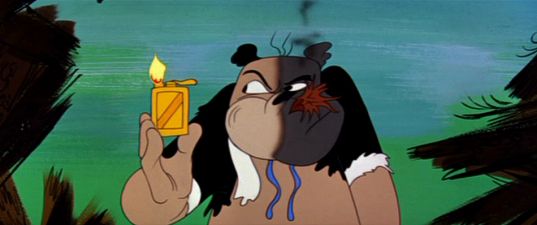
Millionaire Droopy (1956)
A shot-for-shot remake of Wags to Riches (1949), this time in CinemaScope and produced by Hannah & Barbera. I’m not sure what the story is behind these two CinemaScope cartoons (contractual obligation, artistic burnout or both) but they don’t even look like Avery’s other MGM cartoons. The originals have a more delicate color scheme and interesting backgrounds while the CinemaScope shorts have bolder colors and the looser backgrounds that will become commonplace as American studio animation moves into the 60’s.

Cat’s Meow (1957)
Same as above: a shot-for-shot remake of Ventriloquist Cat (1950), this time in CinemaScope and produced by Hannah & Barbera. It was already one of Avery’s weaker cartoons so this offered me nothing. It was actually pretty depressing and feels nowhere near as lively as the original even though the audio may be the exact same.

