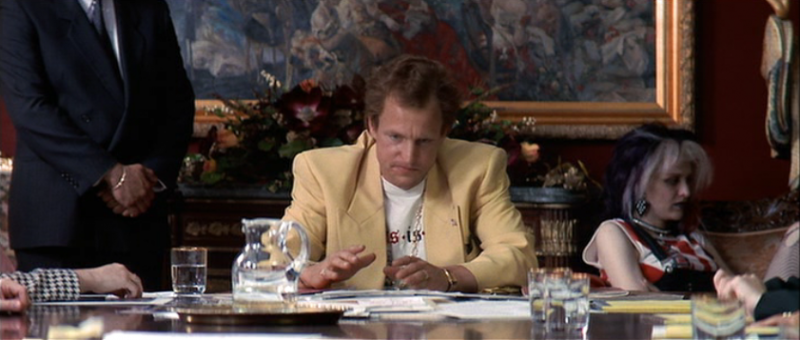
It is easy to embrace The People vs. Larry Flynt as a cinematic defense of freedom of speech or deride it as a botched biopic, but I think Milos Forman is smarter than both of those readings. The skeleton key for my understanding of Forman is in the obscure Soviet-era aesthetic stiob, which is a form of absurd humor that requires such an over-identification with the object of its parody that it is difficult to tell whether there is sincere support for the object, subtle ridicule or some strange mix of the two. The clearest practitioner of the form is Paul Verhoeven, though his is lived out in sci-fi movie structure (Total Recall) and genre gaudiness (Starship Troopers) that openly embraces the absurdity of its aesthetic (RoboCop). Forman, on the other hand, is a smuggler, embracing the more conventional structure of Hollywood pictures (Amadeus) and subverting them slyly through his depiction of off-kilter subjects (Man on the Moon). This has led to more universal acclaim for Forman among mainstream critics and an apathetic disinterest in Forman by many serious critics and cinephiles.
Showing posts with label cinematic stiob. Show all posts
Tuesday, April 30, 2013
The Freedom of Capital: Milos Forman's Portrait of Larry Flynt
It is easy to embrace The People vs. Larry Flynt as a cinematic defense of freedom of speech or deride it as a botched biopic, but I think Milos Forman is smarter than both of those readings. The skeleton key for my understanding of Forman is in the obscure Soviet-era aesthetic stiob, which is a form of absurd humor that requires such an over-identification with the object of its parody that it is difficult to tell whether there is sincere support for the object, subtle ridicule or some strange mix of the two. The clearest practitioner of the form is Paul Verhoeven, though his is lived out in sci-fi movie structure (Total Recall) and genre gaudiness (Starship Troopers) that openly embraces the absurdity of its aesthetic (RoboCop). Forman, on the other hand, is a smuggler, embracing the more conventional structure of Hollywood pictures (Amadeus) and subverting them slyly through his depiction of off-kilter subjects (Man on the Moon). This has led to more universal acclaim for Forman among mainstream critics and an apathetic disinterest in Forman by many serious critics and cinephiles.
Subscribe to:
Posts (Atom)
