Showing posts with label analysis. Show all posts

Wednesday, October 21, 2015

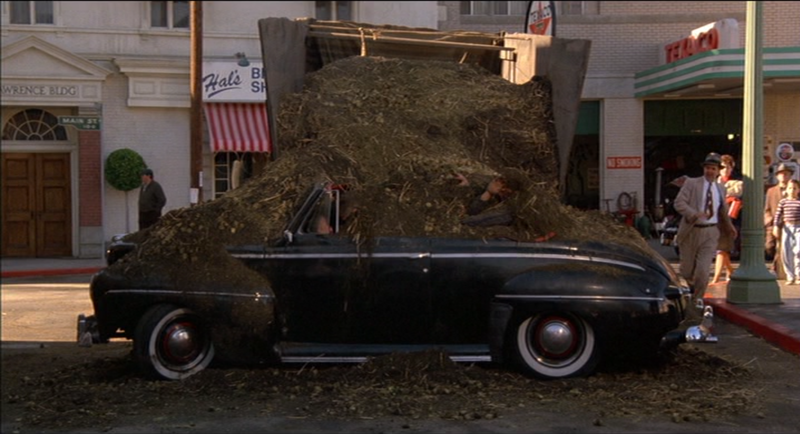
7 Reasons Why 'Back to the Future' is the Perfect Hollywood Blockbuster

Back to the Future is, for me, the most quintessential Hollywood blockbuster ever made. No movie is more Hollywood blockbuster than this and no movie can be more Hollywood blockbuster than this. There is no more Hollywood blockbuster to be had for this movie, for this movie is all of it. It is perfectly Hollywood blockbuster. 

What does that even mean? 

Here's 7 reasons why Back to the Future is the ultimate Hollywood blockbuster.


1. A Perfectly Structured Script
The script is about as perfect a distillation of 3 act structure as you can find anywhere. Every book written about screenplay structure has to come to Back to the Future and bow in reverence. Every emotional beat, every character arc, every object that gets introduced and later fulfilled, every scene that moves forward both plot and character, every event that raises the stakes and complicates the happy outcome. It effortlessly reveals character and plot information while our narrative focus is looking elsewhere. It is a magic act but even if I know the trick I see the beauty in the execution. 

That's not even mentioning the witty dialogue. 
"Where's my pants?" 
"Over there...on my hope chest."


Tuesday, September 8, 2015

Mission: Impossible - Rogue Nation (2015), Auteurism and Genre Determinism

Mission: Impossible - Rogue Nation (Christopher McQuarrie, 2015)
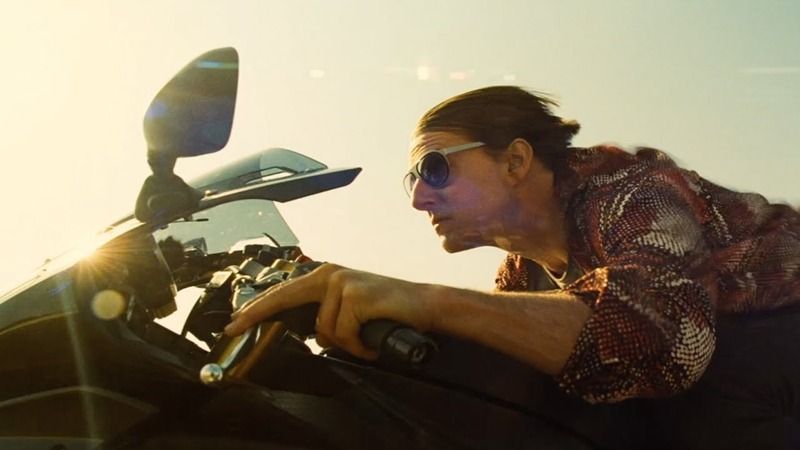
If Jack Reacher was Christopher McQuarrie's resumé for getting the next Mission: Impossible gig, I say that he was clearly the perfect hire. While the Colin Trevorrows of the world are busy making cynical, redundant self-parodies of beloved franchises and the J.J. Abrams of the world are making hundred million dollar Rorschach tests, Christopher McQuarrie is legitimately building upon the legacy of someone like Raoul Walsh or John McTiernan with clever action set pieces and off-handed character humor while still delivering the "impossibly stacked-odds" thrills common to the M:I franchise. It is the perfect popcorn movie in that sense, but, like McTiernan, if you're willing to look closer, you may find even more.

It is neat to see several spy thrillers of the mid-2010s deal with the legitimacy and utility of espionage in the 21st century (I'm thinking also of Skyfall), and that is exactly where Rogue Nation begins. Immediately pitting a top secret conspiratorial shadow government against a top secret conspiratorial shadow agency is a clever bit of plotting in itself but as the movie progresses and the who-can-you-trust/who's-playing-whom dynamics are working themselves out in ever more labyrinthine twists and double-crosses, I began to realize that this is the true legacy of espionage. It could be cynical if we didn't have an investment in seeing Hunt succeed. But this sort of identification is what paints the "good guys" of espionage decidedly behind a nationalistic brush. How do we know who the good guys are? They work for us and are there to keep us safe. In an age that ironically has become increasingly dependent on government involvement, it has also come to despise blatant nationalism. When nationalism suffers, the spy movie suffers along with it. Fittingly then, the bad guy to be stopped is the one who is establishing a "rogue nation" outside of the proper order of things and beyond the accountability (such as it is) of any government or agency. 

But it begs the question: what keeps Hunt – a spy no longer recognized by his home government who is conducting a secret mission without the aid or approval of any other agency – from just walking away from it all? Is it determination or determinism? 

Friday, January 24, 2014

Apocalyptic Nighttime: Taxi Driver (1976)

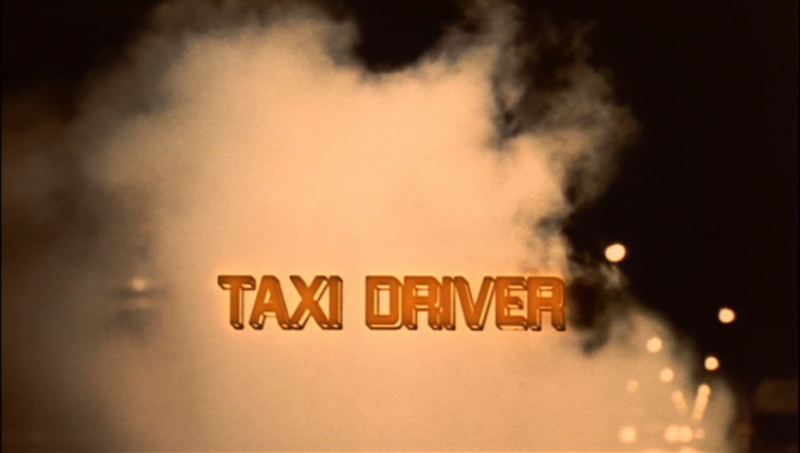
One of the most beautiful title cards in the history of cinema, Scorsese's Taxi Driver links us not only to the seedy grindhouse,
with its fading yellow-orange font, but also to the grand moviehouses of Hollywood's golden age, with its iconic Bernard Hermann score.
Taxi Driver (Martin Scorsese, 1976)
I can see the moment in Scorsese's career where he steps confidently into the role of a great director: the gun purchasing scene in Taxi Driver.  Seen through the singular point of view of Travis as he eyes each gun, with a particularly beautiful pan across the .44, the salesman talks and talks about the benefits of every gun and we stay on Travis as he feels the gun in his hand, following his sightline out the window, across the city, over the freeway and to a couple of pedestrians milling about on the sidewalk several stories below.  No click of an empty chamber.  No comment about the scum. We have no clue where this is going or how far, but we know everything in this world is wrong and it is frightening to imagine what Travis may end up doing.  When he points the gun out the window, the camera's lens is focused on the outside, not the gun.  We feel his mind, even though we do not know it through narration.  
Our hero, imagined: insulated with words, overlooking the city, violence brewing.  A prophet of rage seeks for his voice.

Thursday, November 14, 2013

Choose Your Dream: The Bling Ring's (2013) Wasteland of Teenage Idolatry

The Bling Ring (Sophia Coppola, 2013)
It is such an unusual and shocking thing: bored teenagers of privilege sneaking into the homes of particular celebrities and stealing their clothes.  If it seems foolish and vapid and narcissistic, it is.  But such is the culture of celebrity idolatry America has manufactured, and such is the hope of wildest dream fulfillment bestowed upon it's children by well-meaning but misguided parents.  Sophia Coppola sees all of it.  And instead of building a tired, pointed and moralistic tirade against it, she has crafted a brilliant observational satire that exposes the complex sociological consequences that enable not only the existence of something like TMZ, but the ubiquity of it's tabloid interests.  She also finds a more frightening cause lurking below the surface.

Friday, July 5, 2013

Thieves Like Us (1974)

Thieves Like Us (Robert Altman, 1974)
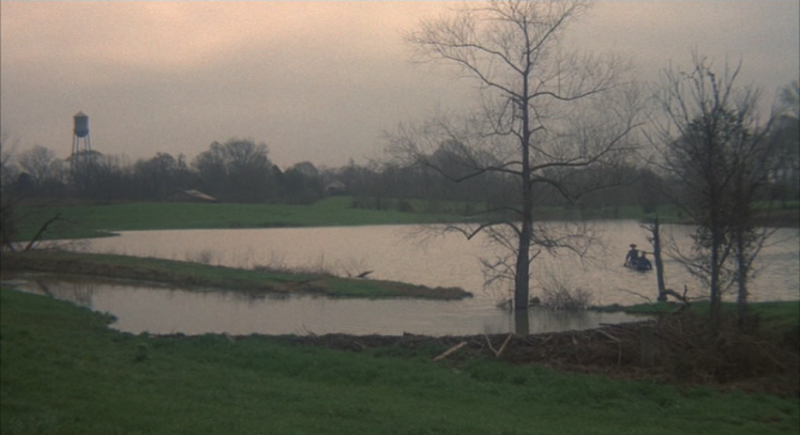
It seems like every problem I had with Dillinger (John Milius, 1973) is effortlessly overcome in Thieves Like Us, even though they are very different films with different intentions.  The bank robbers in Altman’s film are not famous but they do gain recognition that eventually hinders their ability to operate.  The seeds of envy will be sown as Elmo begins to be frustrated with recognition the young Bowie receives in the papers.  They see how myths are woven to add pizzazz and fear for readers but they aren't intelligent enough to understand it.  It just confuses them.  When the paper nicknames him Elmo "Tommy Gun" Mobley, Elmo confesses: "I only had a machine gun once in my life.  I didn't even get to fire it.  I just...held it."  
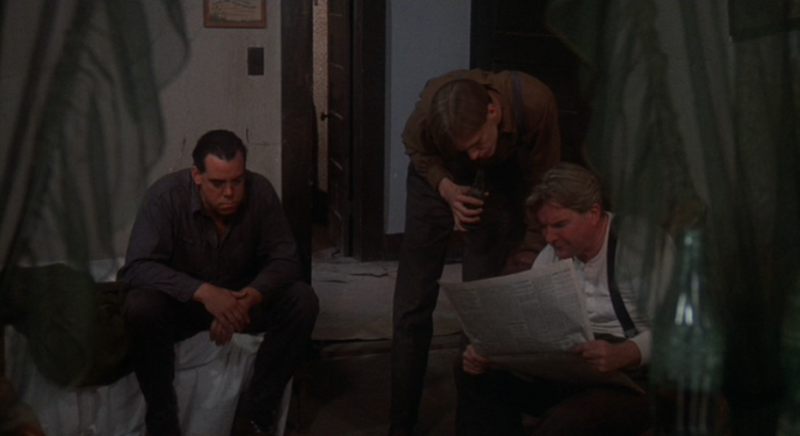
T-Dub reads what the paper says about their jailbreak.  "Not a whole lot about us, is there?"  But the myths are there to justify their eventual violent downfall.
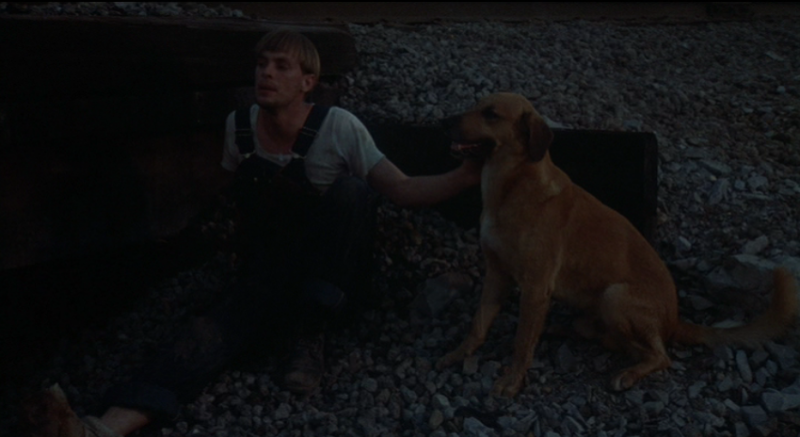
There are moments of such strange pathos and naturalism, as when a nervous Bowie talks to a stray dog to try and calm himself down.
There is a workmanlike notion these characters have about being bank robbers (“This will be my 35th bank…”), a sense of pride in a job well-done, a sense of relief in having something to fill their time.  Altman never treats their bank robbery as anything exceptional.  He only goes inside the bank with them once toward the end.  Likewise, no one talks about the Depression, but poverty is felt in little moments like the insistent mother making sure her kids eat all the food from their plates or the relish with which Lula shows off the outfit T-Dub bought her in New Orleans.  Or take the subtle changes in the robbers' clothing over the course of the film, going from recent escapees to established robbers with reputations and money.  They have to keep out of plain sight but they find their own personal flourishes with their wardrobe.  It isn't ostentatious, but it is real.

The radio is omnipresent, adding a thick atmosphere where fantasy and reality are strangely on an equal plane, where the pursuit of the robbers seems nearly as detached as the adventures of The Shadow. It also works as a unifying device similar to the loudspeakers in M*A*S*H.  (The radio becomes a winking commentary in Bowie and Keechie’s love scene.)  There is pathos and humor in Altman’s human universe, and those two are often inter-woven.  I love the scene where Bowie misses his rendezvous because he couldn’t tell if the pickup at the crossroads was flashing his lights (as planned) or if they were simply shorting out. It is the sort of plain, uneventful human misunderstanding that most movies simply don't have the time for.  
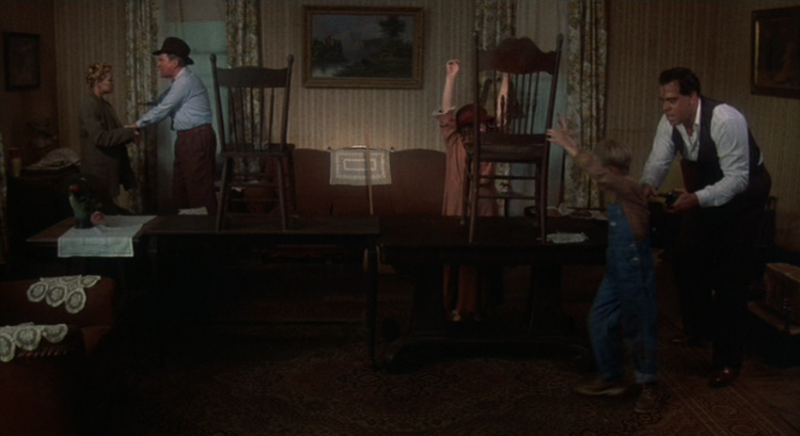
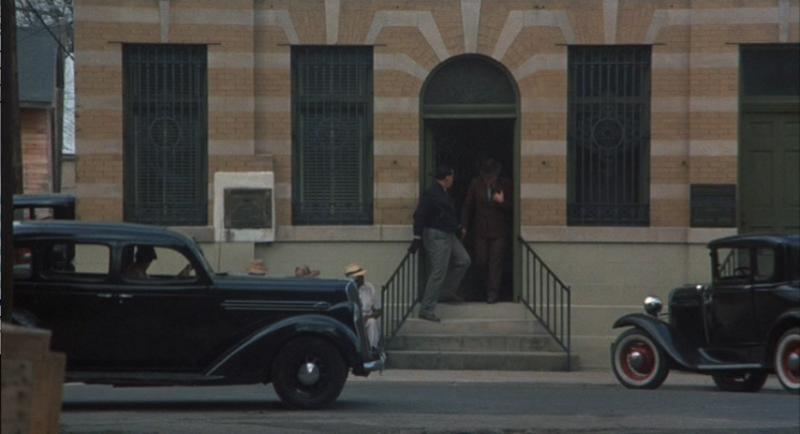
Before we ever see them rob the bank in Yazoo City, we see them set up an enactment to practice what they will do.  Is this truly for their benefit or for the strange sense of joy they get by playacting?  The children are game but Lula fights T-Dub the whole time.  Elmo becomes frighteningly immersed.
T-Dub relishes the moment.  Bowie is more passive.  But, rather than make him innocent, Altman has made him the most naturally gifted bank robber of the group.  Even Bowie himself can't think of anything he could do as well if he were to quit.
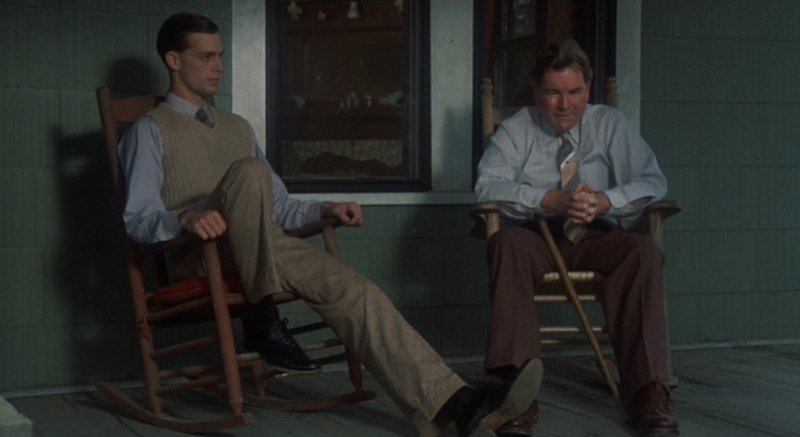
Shelley Duvall was always best in Altman's films.  Somehow he knew best how to use her unique physicality and off-kilter vocal delivery, her natural quirk and charm.  She fills the roll of Keechie with such naïveté and longing, but a determined acceptance of her lot in life that makes her far from passive.  It is easy to see why Bowie falls for her.  There is a sweet and unassuming nature to her that Duvall plays perfectly.  The early scene with the two of them flirting on the porch, remembering growing up is so honest and revealing as they try and hide behind their stories.  John Schuck, Bert Remsen and Keith Carradine are all great too with their naturalistic rapport.  Three people who could only have met in prison and thereby have a strange union that even they don't completely understand.  "They've never seen three like us," T-Dub exclaims.  But does he really believe that or just tell himself that to add dignity and uniqueness to their otherwise working class existence?
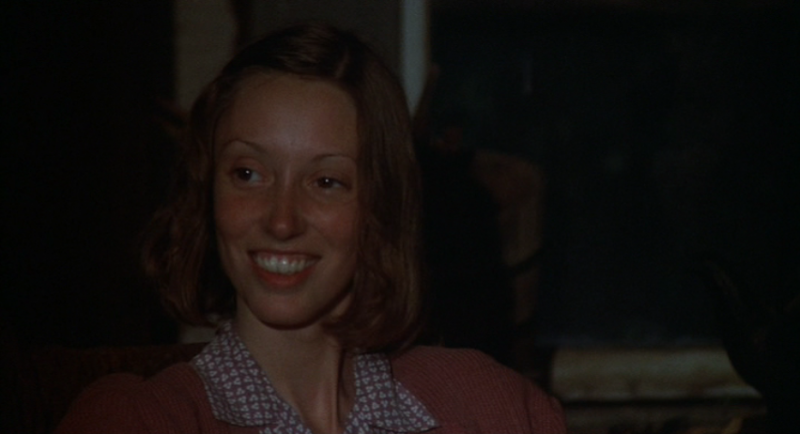
Altman perfectly utilizes Duvall's charm and natural casualness to connect us with her character and make her and Bowie's relationship the vital one of the film, differing strongly from the cordial gentleman's agreement of the three robbers.
The last shot of Thieves Like Us highlights the ordinariness of the characters we have just witnessed and its broader connection to the American south.  Keechie has determined to leave, moving to Dallas to have her baby.  Amazingly, despite her romanticism, she harbors no sympathy for her now dead husband.  "He crossed me up once too often, lying.  He doesn't deserve to have no baby named after him."
Then there is that strange phrase that pops up from time to time: "people like us" or "thieves like us."  It sets the robbers, in their minds, in a category by themselves, a group with a special purpose, personality and function that can only be properly understood by other people like them.  Altman lets them talk that way, but spends his whole movie presenting them as sad and a bit lost.  It's hard not to see this also as a fairly apt comment on the American South.  For Altman, what makes them extraordinary is in just how ordinary they are.  

Thursday, July 4, 2013

The Big Mess (1971)

The Big Mess (Alexander Kluge, 1971)
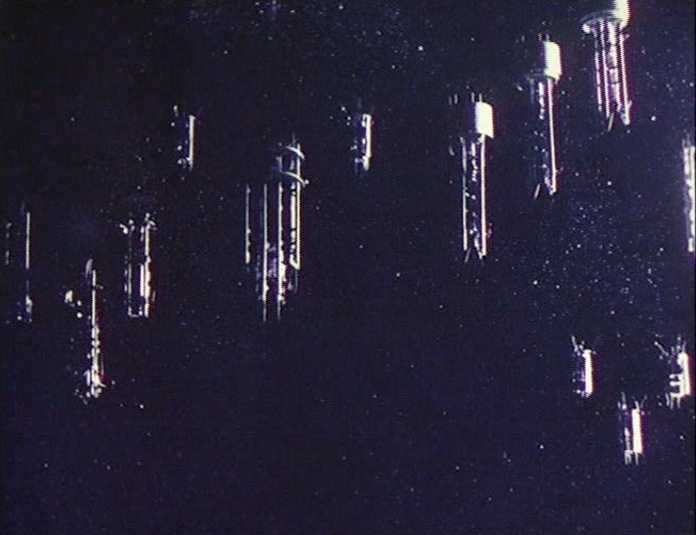
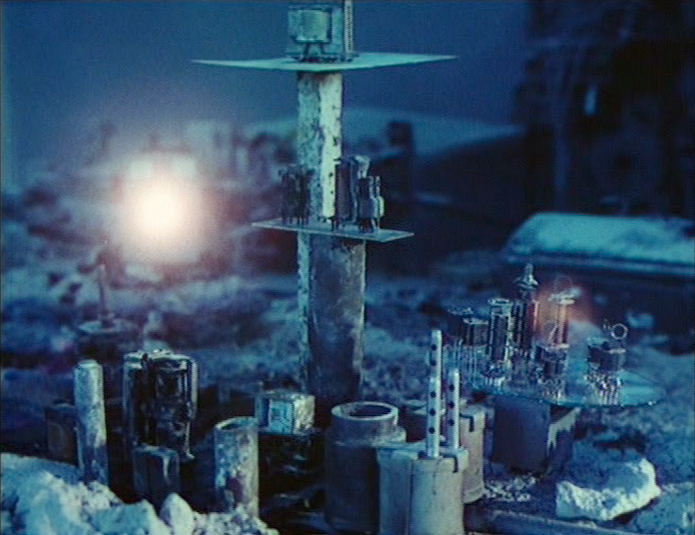
An aptly-named, hyper-collage, hyper-conceptual satire on capitalistic expansion, Kluge’s film feels like a strange d.a. levy poem about space travel written on a wall in a gas station bathroom.  One’s ability to enjoy this film is directly related to one’s ability/willingness to follow the conceptual tangents Kluge is weaving throughout.  Particularly of note are the themes of industrial monopoly and industrial scrap.  Considering that the special effects in the movie are basically appropriated pieces of trash, Kluge is painting the great cosmic expansion as a pursuit where the largest companies are making insanely massive, state-of-the-art spaceships that are simply floating scrap ready to be bought and refurbished into new floating pieces of scrap not long after being launched.  None of it seems to matter to the companies so long as they maintain control.  

Many of Kluge's effects have been cheaply rendered, though not without considerable time, effort and imagination.  But his appropriated trash also conceptually serves his thematic interests.
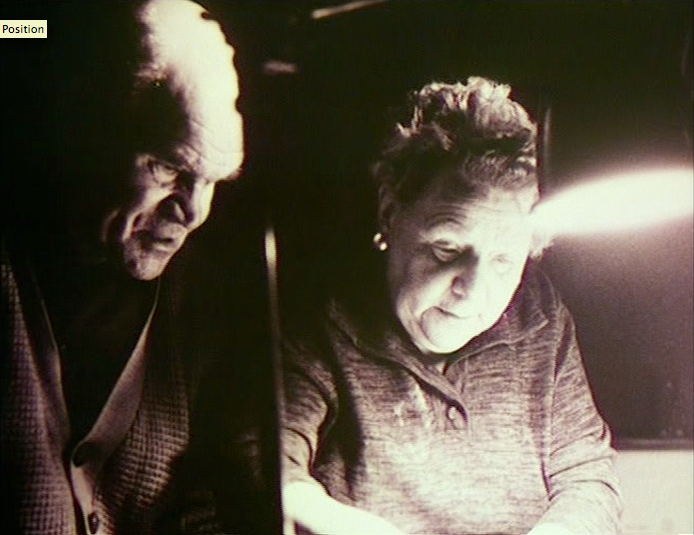
The two accumulators go through their budget.  Even though they act as the system acts they do not have the system's permission to act that way and thereby are a threat to the system. 
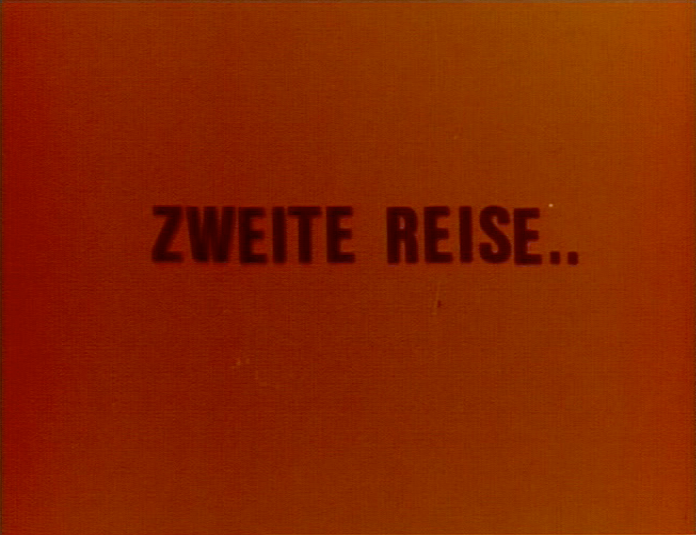
"Second Voyage.."  Kluge utilizes a slew of title card to give narration, some of it narrative, some of it atmospheric (such as some definitions from a Galactic Textbook).  All of it serves his style of collage.  There is no consistency in the color, layout or typeface used between cards, adding the the disorienting and chaotic affect of a disorienting and chaotic future world.

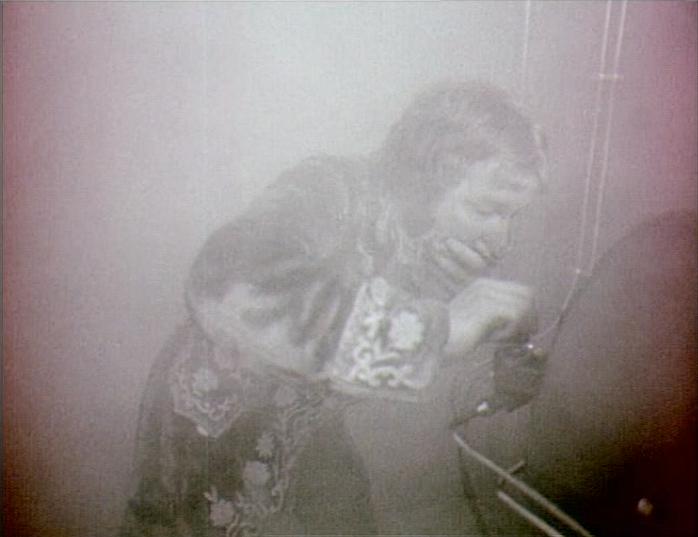
There is a bullying of the private accumulators, who basically do the same thing the large companies do but without their permission (and since the companies own everything, the accumulators are de facto thieves).  Despite the variety of faces that make an appearance in the movie, it is the Suez Canal Company that is the main throughline.  As a viewing experience, it is heavily fractured, a bombarding of words and ideas loosely linked to more traditional narrative images.  It is hard to see the connections sometimes but I think it is the force and speed with which it shifts between tones and storylines that is part of Kluge’s purpose.  Technological advancement is seen as a hodge-podge of old, antiquated notions repurposed and new ideas barely cultivated all quickly cobbled together to serve the capitalistic interests of the ones controlling the galaxy.  

The irony for Kluge is that his movie is like the accumulators in the film: charming and imaginative but ultimately doomed because the galaxy is already owned by the big boys.


Tuesday, April 30, 2013

The Freedom of Capital: Milos Forman's Portrait of Larry Flynt

The People vs. Larry Flynt (Milos Forman, 1996)
It is easy to embrace The People vs. Larry Flynt as a cinematic defense of freedom of speech or deride it as a botched biopic, but I think Milos Forman is smarter than both of those readings.  The skeleton key for my understanding of Forman is in the obscure Soviet-era aesthetic stiob, which is a form of absurd humor that requires such an over-identification with the object of its parody that it is difficult to tell whether there is sincere support for the object, subtle ridicule or some strange mix of the two.  The clearest practitioner of the form is Paul Verhoeven, though his is lived out in sci-fi movie structure (Total Recall) and genre gaudiness (Starship Troopers) that openly embraces the absurdity of its aesthetic (RoboCop).  Forman, on the other hand, is a smuggler, embracing the more conventional structure of Hollywood pictures (Amadeus) and subverting them slyly through his depiction of off-kilter subjects (Man on the Moon).  This has led to more universal acclaim for Forman among mainstream critics and an apathetic disinterest in Forman by many serious critics and cinephiles.